

Email segmentation: 15 strategies for higher engagement & ROI
TL;DR: Email segmentation that actually increases engagement
- Email segmentation is the shift from generic sends to intentional messaging. Instead of emailing everyone the same thing, you split lists by relevance to protect engagement and deliverability.
- Relevance protects inbox placement. Higher engagement signals (opens, clicks, replies) improve long-term deliverability and reduce spam complaints.
- The strongest campaigns layer segmentation types, not just one. Role 👤 + company size 🏢 + engagement 📊 + intent 🎯 outperform single-filter lists.
- Role-based segmentation adjusts framing, not just offers. Founders, managers, and contributors evaluate value differently.
- Firmographic segmentation changes positioning. A 20-person startup and a 2,000-person enterprise do not buy the same way.
- Behavioral and engagement segments protect list health. Treat active and inactive contacts differently to avoid fatigue.
- Intent-based segmentation improves timing. Trigger events (funding, hiring, site visits) dramatically increase response probability. ⏱️
- Lifecycle segmentation prevents mismatched messaging. Cold, warm, prospect, and customer audiences require different conversation depth.
Email isn’t dead. But generic email is.
Inbox providers filter harder than ever, while buyers move faster than most campaigns can keep up. As a result, when the same message gets sent to everyone, engagement drops, deliverability slips, and results follow it down.
That’s where email segmentation comes in. It’s what separates campaigns that get ignored from campaigns that earn real engagement.
In this guide, we break down what email segmentation actually is, the strategies that work, and how to keep performance and deliverability strong as you scale.
What is email segmentation (and why it matters)
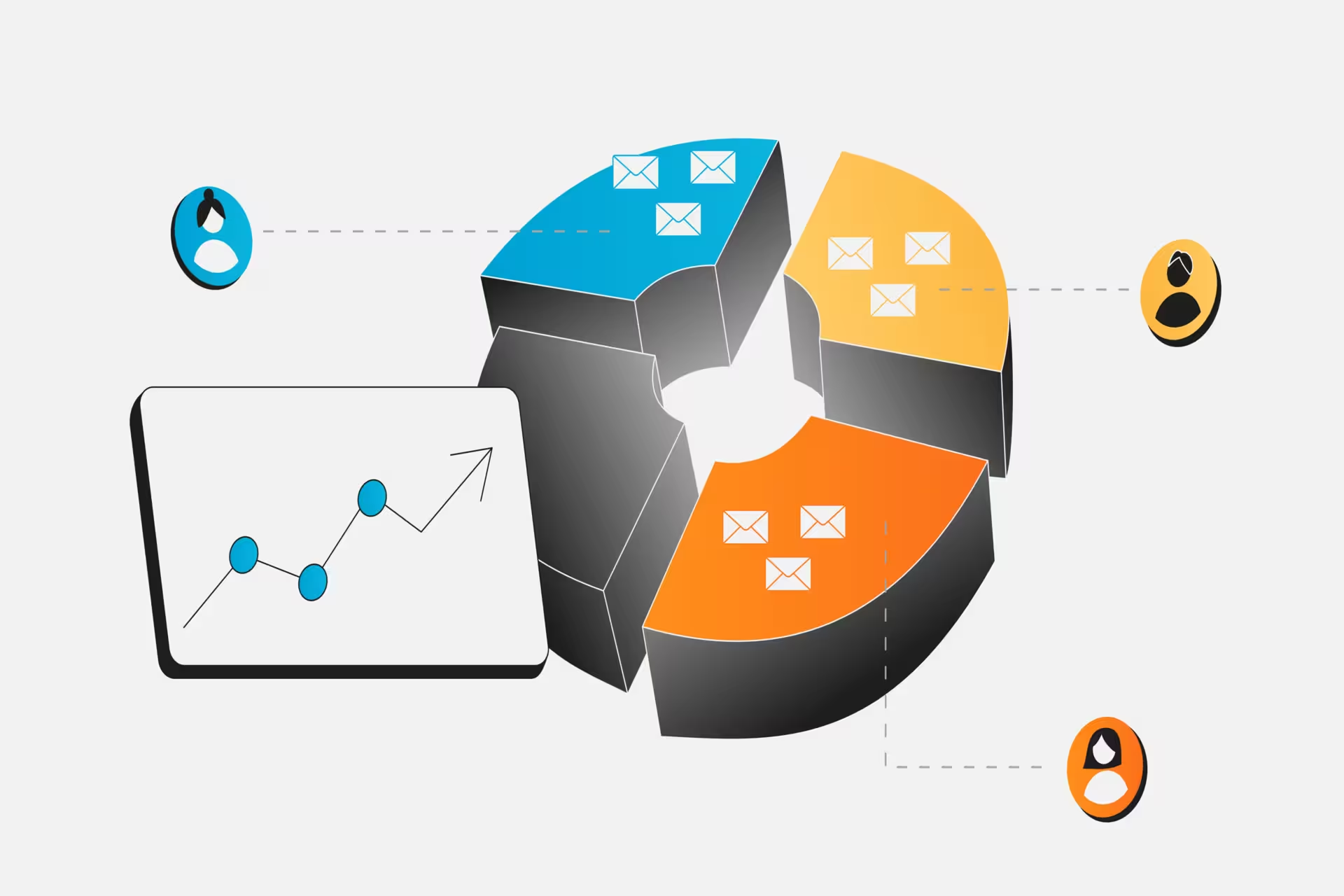
Email segmentation is simply the way you split your email list into smaller groups, so you’re not sending the same message to everyone. Those groups can be based on a variety of things.
While it may sound complex, the goal here is relevance.
And right now, relevance matters more than ever. Inbox providers pay close attention to how people interact with your emails. When messages feel off, they get ignored. When that happens consistently, future emails start getting filtered before anyone even sees them.

Segmentation helps you avoid irrelevance. It makes campaigns feel intentional instead of generic, and it gives your emails a much better chance of being opened, read, and acted on.
Benefits of email segmentation
Once segmentation is in place, the impact shows up quickly.
Campaigns become easier to control, results become easier to predict, and performance improves across the board without increasing send volume. In a nutshell, segmentation gives structure to how and why emails perform.
But don’t just take our word for it, take a look at what that looks like in practice.
- Higher open rates: Segmented emails are more likely to earn attention at a glance. When recipients recognize that a message is meant for them, opens follow naturally.
- Increased click-through rates: Clear alignment between audience and message makes next steps feel obvious. That clarity leads to more clicks, replies, and follow-through.
- Better conversion rates: Segmentation removes friction from decision-making. When emails speak to a specific context, conversions happen with less resistance.
- Higher return on investment (ROI): More focus means less waste. Segmentation concentrates effort on audiences that are more likely to act, improving returns without sending more emails.
- Fewer unsubscribes: Relevance keeps people subscribed. Segmented campaigns reduce fatigue by avoiding repetitive or mismatched messages.
- Improved email deliverability: Consistently strong engagement supports long-term inbox placement. Segmentation helps maintain sending stability as campaigns scale.
- Reduced spam complaints: Messages that feel expected and appropriate are less likely to be flagged. That protects sender reputation over time.
- Stronger engagement across campaigns: Segmentation compounds. As lists become more refined, engagement stays higher from one campaign to the next.
- More consistent campaign performance: Instead of unpredictable spikes and drops, segmented campaigns deliver steadier results you can plan around.
- Clearer audience insights: Smaller segments make performance patterns easier to spot. That visibility helps you refine messaging faster and with more confidence.
The main types of email segmentation you should know
Not all segmentation is created equal.
Some types help you understand who you’re emailing. Others help you decide when and how to reach them. The strongest campaigns usually combine multiple types instead of relying on just one.
Here are the main types of email segmentation, and what each is best used for.
.webp)
👤Demographic segmentation
Demographic segmentation groups people based on individual attributes like age, job title, seniority, or function.
This type of segmentation is most useful when the value of your message changes depending on who the person is. A founder, a manager, and an individual contributor may all work at the same company, but they care about very different outcomes.

Use demographic data to adjust framing and tone, not just the offer itself.
🏢 Firmographic segmentation
Firmographic segmentation applies demographic-style data to companies instead of individuals.
Common firmographic attributes include company size, industry, revenue, and growth stage. This type of segmentation is especially important in B2B, where context at the company level strongly influences priorities, budgets, and buying behavior.
A message that resonates with a 20-person startup rarely works the same way for a 2,000-person enterprise.
🧠Behavioral segmentation
Behavioral segmentation groups contacts based on what they’ve already done.
This can include actions like opening emails, clicking links, visiting pages, downloading resources, or replying to previous messages. Because it’s based on real activity, behavioral data is one of the most reliable segmentation inputs.
Behavioral segmentation is especially effective for follow-ups and sequencing decisions.
🌍Geographic segmentation
Geographic segmentation is as straightforward as it sounds. It organizes contacts by location, such as country, region, or time zone.
Location can influence timing, language, cultural context, and compliance. Even strong messaging can underperform if it reaches someone at the wrong local time.
This type of segmentation works best when paired with others, rather than used on its own.
💭Psychographic segmentation
Psychographic segmentation focuses on motivations, priorities, and preferences.
This data is rarely collected directly. It’s usually inferred from behavior, content engagement, or qualitative signals. When applied carefully, it helps sharpen positioning rather than broaden it.
Treat psychographic segmentation as a refinement layer, not a starting point.
🔄Lifecycle segmentation
Lifecycle segmentation groups contacts based on where they are in their relationship with your business.
This includes new subscribers, active prospects, customers, inactive contacts, or former buyers. Each stage carries different expectations, and lifecycle segmentation helps prevent mismatched messaging.
📈Engagement-based segmentation
Engagement-based segmentation focuses on how consistently someone interacts with your emails over time.
Highly engaged contacts and inactive ones should not be treated the same, even if everything else about them is identical. Engagement segments help you adjust frequency and message intensity.
Engagement-based segmentation is one of the safest ways to protect long-term list health.
🎯Intent-based segmentation
Intent-based segmentation focuses on signals that suggest interest or readiness to act.
These signals can come from on-site behavior, content consumption, timing-based triggers, or third-party intent data. Unlike broad behavioral data, intent signals are used to prioritize outreach when timing matters most.
Intent-based segments are typically smaller, but they tend to produce the strongest results when handled carefully.


15 email segmentation strategies that actually work
Now that we’ve broken down the main types of email segmentation, the next step is applying them in real campaigns.
On their own, segmentation types are just inputs. The results come from how you use them or even combine them. The most effective email strategies don’t usually rely on a single rule or data point – they can layer multiple signals to decide who gets emailed, when they get emailed, and what the message should focus on.
In practice, that might look like starting with firmographics, refining by role, adjusting messaging based on engagement, and timing outreach using intent signals. Each layer adds clarity without unnecessary complexity.
Below are the segmentation strategies we’ve seen work consistently, helping campaigns stay targeted, controlled, and repeatable.
Talk to roles, not just companies
Two people at the same company can care about completely different outcomes.
A founder thinks in terms of growth and risk. A manager focuses on execution and efficiency. An individual contributor wants tools that make their job easier. When emails ignore those differences, even good offers fall flat.
For instance, a founder responds to subject lines like “Reducing CAC without hiring”, while a manager is more likely to engage with “Cut onboarding time by 30%.” Same company, different lens.
Segmenting by role lets you adjust language, priorities, and framing, so the message actually matches how that person evaluates value.
✉️Segmentation types used: demographic, firmographic
Don’t mix industries that buy differently
Industries may look similar on the surface, but buying behavior varies widely.
What resonates in SaaS often misses in manufacturing. What works for agencies rarely lands the same way in healthcare or finance. When industries are mixed into one segment, messaging gets watered down to the lowest common denominator.
A SaaS buyer may respond to “launch in days, not months,” while a healthcare buyer looks for “audit trails, permissions, and compliance readiness.”
Separating industries allows you to speak more precisely to shared challenges, expectations, and buying cycles.
✉️Segmentation types used: firmographic
Adjust messaging for company size (it matters more than you think)
Company size changes everything: budget, decision speed, risk tolerance, and internal complexity.
Smaller teams move fast and care about speed to value. Larger organizations prioritize stability, approvals, and long-term impact. Treating them the same leads to mismatched expectations.
A 15-person startup might engage with “no onboarding, no contract”, while a 1,000-person company needs reassurance around security reviews, stakeholder buy-in, and rollout planning.
Segmenting by company size helps you set the right tone and level of detail for each audience.
✉️Segmentation types used: firmographic, lifecycle
Let location shape timing and context
Location affects more than just time zones.
Local business hours, regulations, and market norms influence how messages are received. An email sent at the wrong time or with the wrong regional context is easy to ignore.
For example, a campaign sent at 9 a.m. EST consistently underperforms in Europe, while references to US-only compliance standards create friction for EU buyers.
Segmenting by location helps you align timing and context, so messages feel natural instead of intrusive.
✉️Segmentation types used: geographic
Match your message to the funnel stage
Not everyone on your list is ready for the same conversation.
Someone early in the funnel needs clarity and context. Someone further along needs specifics and next steps. When emails ignore funnel stage, messages either push too hard or don’t push enough.
An early-stage contact may engage with “How teams reduce manual reporting”, while someone evaluating options responds better to “How this compares to your current setup.”
Segmenting by funnel stage helps you send emails that move people forward, instead of overwhelming them or leaving them stuck.
✉️Segmentation types used: lifecycle, behavioral
Keep cold and warm audiences separate
Cold vs. warm email audiences behave very differently, even if they look similar on paper.
Cold contacts need introduction and trust. Warm contacts already recognize your brand and intent. Mixing the two leads to messages that feel either too aggressive or unnecessarily cautious.
A cold prospect may respond to a short, problem-led intro, while a clear follow-up tied to a past interaction.
Separating your cold email and warm email audiences keeps expectations aligned and makes campaigns easier to control.
✉️Segmentation types used: lifecycle, engagement-based
Check out the best 10 cold email strategies of the year!
Treat engaged and inactive contacts differently
Engagement tells you how much attention you’ve earned.
Highly engaged contacts can handle clearer calls to action and more direct messaging. Inactive contacts often need a lighter touch or a different angle altogether.
Someone who clicked your last two emails might respond to “Worth a quick look?”, while an inactive contact is more likely to re-engage with “Still relevant?” or a value-first check-in.
Segmenting by engagement level helps you focus effort where it’s working, while avoiding fatigue and wasted sends elsewhere.
✉️Segmentation types used: engagement-based, behavioral
Use intent signals to decide who gets emailed first
Not all prospects are equal at any given moment.
Intent signals – like recent site visits, repeat page views, or content engagement – show who’s paying attention right now. Ignoring those signals means missing the most effective timing window.
A prospect who visited your pricing page twice this week is far more likely to respond than someone who hasn’t interacted in months. Prioritizing the former changes reply rates immediately.
Segmenting by intent helps you focus outreach where timing is on your side, instead of spreading effort evenly across low-intent contacts.
✉️Segmentation types used: intent-based, behavioral
Lead with the pain point, not the persona
Personas are helpful, but they don’t explain why someone pays attention.
Two people with the same role can care about completely different problems. When emails lead with a persona instead of a pain point, the message feels generic, even if the targeting looks right.
A “Head of Marketing” might respond to “fix attribution gaps”, while another reacts to “reduce paid spend waste.” Same title, very different priorities.
Segmenting around pain points lets you focus on what actually motivates action, not just who someone is on paper.
✉️Segmentation types used: psychographic, firmographic
Don’t push a sale before someone’s ready
Timing matters just as much as messaging.
Some contacts are still gathering information. Others are actively evaluating solutions. When emails jump straight to selling too early, resistance goes up and engagement drops.

A contact who just downloaded a guide is better served with “how teams approach this problem”, while someone who requested a demo expects pricing, comparisons, and next steps.
Segmenting by readiness helps you align the ask with where someone is in their decision process, instead of forcing momentum that isn’t there yet.
✉️Segmentation types used: lifecycle, intent-based
Let past email behavior guide follow-ups
Your email data tells you more than most people realize.
Opens, clicks, replies, and non-responses all signal how interested someone actually is. Ignoring that history leads to follow-ups that feel random or repetitive.
Someone who opened twice but didn’t reply may need a clearer value prop, while someone who never opened likely needs a different subject line or a pause altogether. Treating both the same wastes effort.
Segmenting based on past email behavior helps you adjust tone, frequency, and next steps with far more precision.
✉️Segmentation types used: behavioral, engagement-based
Segment by what people actually care about
Relevance isn’t about personalization tokens. It’s about alignment.
When emails speak to topics or outcomes someone cares about, engagement follows. When they don’t, the message gets ignored no matter how well it’s written.
A prospect focused on reducing manual work responds differently than one focused on cutting costs or improving visibility. One message can’t effectively cover all three.
Segmenting by interests or priorities keeps messaging focused on real value, not volume.
✉️Segmentation types used: psychographic, behavioral
Give high-value accounts their own strategy
Not all accounts deserve the same approach.
High-value accounts often involve larger deal sizes, more stakeholders, and longer decision cycles. Treating them like standard leads usually leads to missed opportunities.
A strategic account may warrant fewer emails with deeper context, internal alignment messaging, or multi-threaded outreach, while smaller accounts benefit from faster, more direct sequences.
Creating a dedicated segment for high-value accounts lets you apply tailored messaging, thoughtful pacing, and higher-touch outreach where it actually pays off.
✉️Segmentation types used: firmographic, lifecycle, intent-based
Use timing and triggers to stay relevant
Relevance isn’t just about who you email. It’s also about when.
Trigger events (like funding rounds, hiring spikes, product launches, or meaningful behavior changes) create short windows where attention is higher than usual. Miss that window, and even a strong message can feel late or irrelevant.
A company that just announced a funding round is far more receptive to growth-focused messaging than it was a month earlier. Likewise, a sudden increase in job postings often signals new internal pressure points you can speak to.
Segmenting around timing and triggers helps you show up when context is working in your favor, not after interest fades.
✉️Segmentation types used: intent-based, behavioral
Protect your core ICP from edge cases
Every lead list has outliers.
Some contacts technically fit your criteria but don’t behave like your best customers. When those edge cases are mixed into core segments, messaging gets diluted and performance suffers quietly.
For example, a small subset of prospects may match your industry and role filters but consistently ignore emails or never convert. Designing campaigns to accommodate them weakens messaging for everyone else.
Separating your core ICP in a quality lead list from edge cases keeps campaigns focused, measurable, and easier to optimize, without forcing compromises that hurt results.
✉️Segmentation types used: firmographic, behavioral
How to get started with email segmentation (step-by-step)
Email segmentation doesn’t need to be complicated to be effective. The biggest mistakes happen when teams either overthink it or try to segment everything at once.
This step-by-step process keeps things focused, practical, and scalable.
%20(9).webp)
Step 1: Start with one primary goal
Before you touch your data, get clear on what you’re trying to improve.
Are you trying to increase replies on cold outreach? Improve conversions from warm leads? Protect deliverability while scaling volume? Each goal points to different segmentation priorities.
Pick one outcome to optimize first. Segmentation works best when it has a clear job to do.
Step 2: Choose one core segmentation layer
Don’t stack multiple segmentation rules right away.
Start with one high-impact layer, such as:
- Role or job title
- Industry
- Company size
- Cold vs warm status
This gives your campaigns structure without adding unnecessary complexity. You can always layer more later.
Step 3: Clean and validate your data
Segmentation only works if the data behind it is reliable. Before building segments:
- Remove invalid or bounced addresses
- Normalize job titles and company names
- Fix obvious gaps or inconsistencies
Bad data creates bad segments, which leads to misleading results and wasted sends.
Step 4: Create clear, mutually exclusive segments
Each contact should clearly belong in one segment for the campaign you’re running.
Avoid overlapping segments where the same person could receive conflicting messages. That confusion shows up quickly in engagement metrics and reply quality.
Clear boundaries make performance easier to measure and optimize.
Step 5: Adjust the message, not just the list
Segmentation isn’t just about who gets the email. It’s about how the message changes. Even small adjustments matter:
- Different subject lines
- Different framing of the same offer
- Different calls to action
If the message stays identical, segmentation loses most of its value.
Step 6: Test with small volume first
Before scaling, test each segment with controlled volume.
This helps you spot:
- Messaging mismatches
- Engagement gaps between segments
- Early deliverability issues
Small tests protect your sender reputation and give you cleaner feedback.
Step 7: Measure segment performance independently
Look at results per segment, not just overall campaign averages.
Pay attention to:
- Opens and replies
- Clicks or conversions
- Unsubscribes and complaints
Segments that consistently underperform usually need message changes, not more volume.
Step 8: Layer one additional signal (only when ready)
Once your base segmentation is working, add one more layer, such as:
- Engagement level
- Funnel stage
- Intent signals
Layering works best when done gradually. Each added signal should improve clarity, not complexity.
Step 9: Document what works and reuse it
Segmentation gets easier over time if you document winning patterns.
Keep notes on:
- Which segments convert best
- Which messages resonate with which audiences
- Where engagement drops
This turns segmentation from a one-off tactic into a repeatable system.
How to measure email segmentation success
Email segmentation works when performance becomes clearer, not just higher.
Instead of judging campaigns by overall averages, measure results at the segment level. That’s where segmentation actually shows its impact.
Focus on a few core signals:
- Engagement per segment: Opens, clicks, and replies should vary meaningfully between segments. If everything performs the same, the segmentation isn’t doing much.
- Conversions and next steps: Track which segments consistently move forward, not just which ones engage.
- Deliverability health: Watch unsubscribes and spam complaints by segment. Problem segments usually reveal themselves quickly.
- Consistency over time: Strong segmentation produces repeatable results, not one-off spikes.
If segmentation makes it easier to see what’s working, what isn’t, and why, it’s doing its job.
Final thoughts: Turn segmentation into a growth system
Alright, we’ve covered a lot about email segmentation and how it shapes campaign performance.
What it all comes down to is relevance. If your emails don’t feel relevant, nothing else really matters. Great copy, strong offers, and higher send volume won’t make a difference if the message doesn’t land with the right audience.
That’s where segmentation earns its place. It gives structure to relevance. Instead of guessing, you start making deliberate decisions about who should receive what, and why.
We’ve seen this play out across hundreds of campaigns. When segmentation is treated as a one-off setup, results stay inconsistent. But when it becomes part of how teams plan, test, and refine outreach, engagement stabilizes and scaling feels far less risky.
The key shift is simple: segmentation stops being a tactic and starts functioning as a system. One that improves with every send.
At the end of the day, segmentation isn’t about creating more complexity. It’s about clarity. And clarity is what turns email from a hit-or-miss channel into something you can actually rely on.
Frequently asked questions
Email segmentation is the practice of splitting your email list into smaller groups. By grouping contacts based on context, behavior, or intent, your emails feel relevant instead of generic, which leads to better engagement and stronger long-term performance.
In B2B, the strategies that work best layer multiple signals. Segmenting by role, industry, company size, and engagement – then timing outreach based on intent – keeps messages aligned with how real buying decisions happen.
Segmentation improves ROI by cutting waste. You send fewer irrelevant emails, focus on audiences that actually respond, and get more results without increasing volume or risking deliverability.
The biggest mistakes are overcomplicating segments, using bad data, sending identical messages across segments, and mixing cold and warm audiences. Segmentation works when it stays intentional and performance-driven.
Don’t miss these

Get your first lead this month
14 days to get started. 7 days to get your first lead on average.


