

We tested every outbound prospecting tactic - here's what converts
TL;DR: Outbound prospecting
- Outbound prospecting is proactive, not reactive. Your team identifies buyers matching your ICP and contacts them before they raise their hand. The goal is to start a conversation, not close a deal. 🎯
- ICP precision is the biggest lever. Teams layering intent signals on top of firmographics convert to meetings at 40–50%, versus 10–15% with demographic-only targeting.
- Your TAM determines how hard you can push any channel. A tight ICP under 1,000 companies needs high-touch personalization. A broad ICP of tens of thousands can scale volume with intent-based segmentation.
- Cold email is the most scalable outbound channel by a wide margin. Industry average reply rate is 3.4%. Signal-targeted campaigns hit 5–10%+. Best-in-class with tight personalization reach 15% and above. 📧
- Cold calling still works. 57% of C-level and VP-level buyers prefer phone as a contact channel.
- LinkedIn DMs convert best as a warm channel, not a cold one. Send connection requests to everyone who replied to your cold email, including "not now" replies, then let organic content do the work first.
- LinkedIn ads plus cold email is the strongest complement we've found. Upload your email list as a matched audience so prospects see your brand in their feed at the same time your emails land in their inbox. 🔄
- No single channel wins alone. The most consistent pipeline comes from cold email for scale, LinkedIn ads for brand reinforcement, connection requests for relationship-building, and organic content for long-term nurturing.
There are about 47 lists online telling you which outbound prospecting tactics to try. (We know because we've read most of them while procrastinating on actual work.)
- Cold email.
- Cold calling.
- LinkedIn DMs.
- Webinars.
- Community outreach.
And the list grows every year. But the actual verdict? Nowhere to be found.
So here's ours.
We run outbound prospecting campaigns for B2B companies every day. We also fill our own pipeline using the exact same tactics, which means we've had skin in the game on all of them.
So some of these compound beautifully. Some perform well in isolation. And some look brilliant in a blog post while generating almost zero pipeline in practice.
This is the ranked verdict. We'll cover what each tactic actually does, which ones convert, and why the channel you pick matters far less than how you string them together.
What is outbound prospecting?
Outbound prospecting is the proactive practice of identifying potential B2B buyers who match your ideal customer profile and contacting them before they express any interest.
Rather than waiting for leads to find you, your team initiates the conversation through cold email, calls, LinkedIn outreach, or paid channels, targeting the companies and roles most likely to convert.
But the goal of first contact isn't to close a deal. It's to start a conversation.
Sales development representatives (SDRs) and business development representatives (BDRs) own most of this work: researching accounts, building lists, running sequences, and booking meetings for the closers.
The underlying logic is simple: Don't wait for the right buyer to show up. Go find them.

Outbound is one piece of a bigger puzzle. So if you’re curious, we put together a full breakdown of how to generate B2B leads that covers both inbound and outbound. For this post, we're going deep on outbound only.
So, what makes outbound different from just sending emails and hoping for the best? That brings us to the next foundational piece.
Outbound prospecting vs. inbound: what is the real difference?
Inbound prospecting means working leads who already engaged with your brand. They downloaded a guide, watched a webinar, requested a demo. And the conversation starts warm.
Outbound prospecting starts cold: you've identified someone as a good fit based on firmographic and behavioral signals, but they haven't raised their hand yet.
Here's the practical breakdown:
And here is important to note something: neither approach is complete on its own.
Inbound delivers higher intent per lead but depends entirely on your content reach and organic traffic. But outbound delivers volume and predictability.
A good way to think about it: inbound is fishing with a net. Outbound is fishing with a spear. So both work and the best teams use both.
If you want a deeper look at how the full mix fits together, our 9 lead generation strategies guide breaks down when to lean on each approach.
Now that we've sorted the "inbound vs outbound" question, there's something more foundational we need to cover before we get into the tactics themselves.
What is an ICP and why does it matter for outbound prospecting?
Your ICP (ideal customer profile) is a data-backed definition of the accounts most likely to buy, expand, and stay. For outbound prospecting, it's the filter that everything runs through: list building, channel selection, messaging, and sequence design.
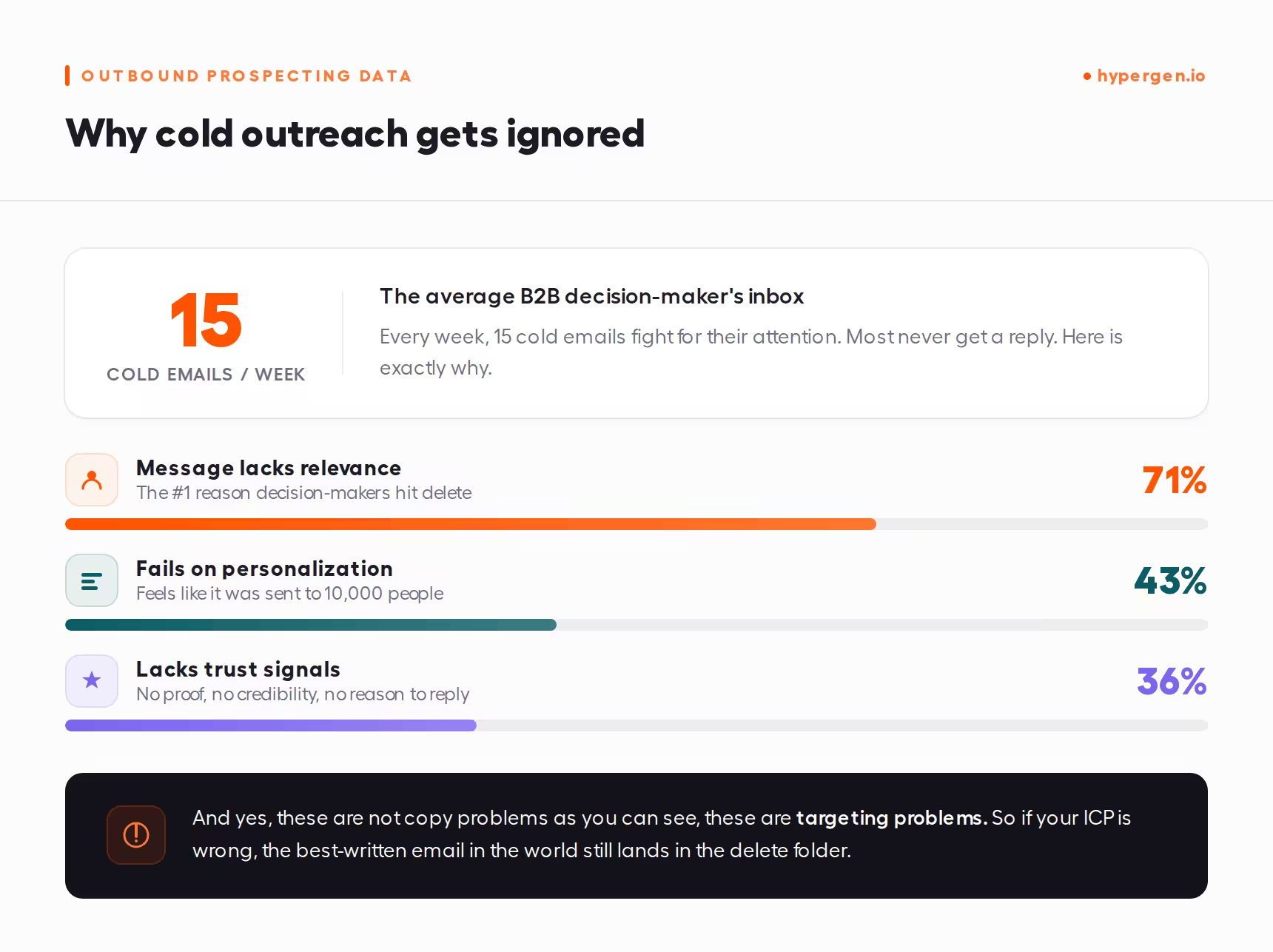
Without a sharp ICP, you're spending budget reaching people who will never convert.
A clearly defined ICP also sets your TAM (Total Addressable Market), which determines how hard you can push each channel before you run out of runway.
And this matters more than most teams realize. The only real ceiling on cold email or cold calling as channels is how big your ICP is.
- Tight ICP (under 1,000 companies): You can't blast at scale. You need high-touch, deeply personalized outreach where every message is tailored to that specific company's situation.
- Broad ICP (tens of thousands of potential buyers): You can scale volume and let intent-based segmentation do the heavy lifting.
So running the wrong playbook for your ICP size is one of the most expensive mistakes we see.
But what goes into a strong ICP? Here's what we actually use:
- 🏢 Firmographics: company size, industry, geography, revenue range
- 🔧 Technographics: the tools they already use (a CRM switch is a huge buying signal, by the way)
- 📈 Buying signals: funding events, leadership changes, headcount growth, job postings
- 👤 Decision-maker profile: title, seniority, who actually signs off on the budget
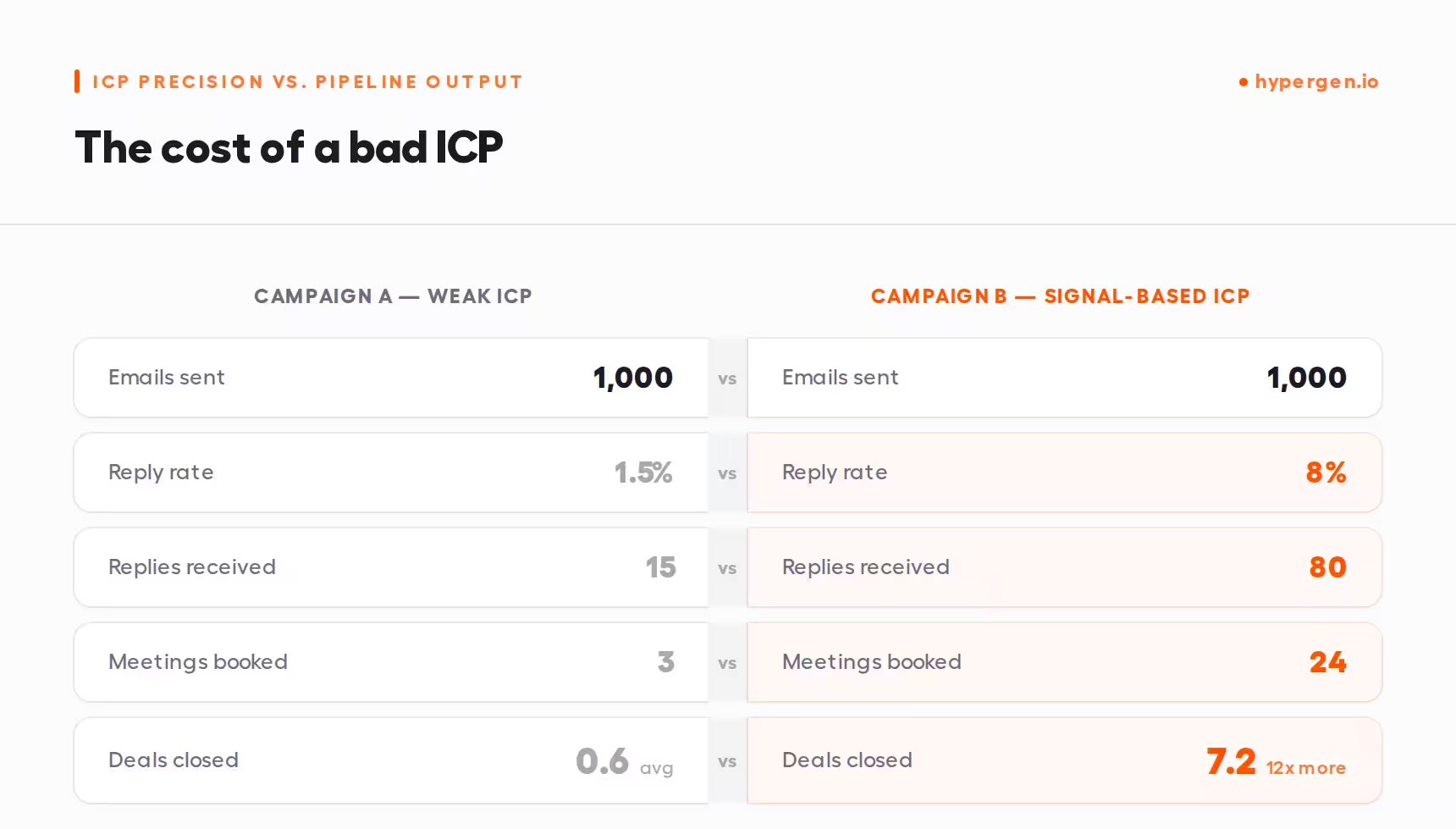
When we build ICP lists that layer intent signals on top of firmographic fit, we see meeting-to-conversion rates of 40–50% compared to 10–15% with traditional demographic-only targeting.
So that gap is not small at all.
And using tools like Clay for signal-based prospecting make it possible to monitor these signals continuously and surface accounts the moment they enter a buying window (our guide on Clay data enrichment covers how to build this kind of setup step by step!).
Once your ICP is solid, then you can start making smart channel decisions. Which brings us to the part everyone actually wants to get to.
What are the most effective outbound prospecting tactics? Our take
Okay, here's how we honestly rank the channels after running campaigns across many industries.
We're ranking by scalability, conversion rate, and how well each channel compounds with the others.
Tier 1: High-scalability direct outreach
Cold email
Cold email is our bread and butter, and for a good reason. It's the most scalable channel in outbound prospecting by a wide margin.
The only real ceiling is your TAM. A properly built cold email campaign, with intent-based segmentation and solid deliverability infrastructure, can reach volumes that no other channel can touch.
The honest benchmarks 👇
- Industry average reply rate: ~3.4%
- Well-run, signal-targeted campaigns: 5% to 10%+
- Best-in-class with tight personalization: 15% and above
And the difference in results is almost never volume. It's personalization and targeting precision (and we are going to cover that later as well).
When is comes to email, there is one thing we cannot stress enough: deliverability is not optional. A great email that lands in spam is worse than not sending at all, because it damages your domain reputation for future sends.
So getting your cold email infrastructure properly set up (dedicated sending domains, SPF/DKIM/DMARC, warmup, rotation) is a prerequisite, not an afterthought.


Cold calling
Cold calling isn't dead. We know, we know. But research shows 57% of C-level and VP-level buyers still prefer phone as a contact channel. While it doesn't scale the same way email does, it works brilliantly as a complement.
Here the key is framing the call correctly.
So don't open directly with a pitch. You can open by referencing the email you sent:
"I reached out last week about X. Figured a quick two-minute call would be more useful than another email."
And keep the first call short. Because the goal here isn't to close anything on the spot. It's to qualify interest and earn a proper follow-up conversation.
Our breakdown of cold calling vs. cold emailing goes deep on when to use each and how to run them together.
LinkedIn connection requests and cold DMs sit in an interesting spot.
And the best use of LinkedIn DMs isn't as a cold channel. It's as a warm one.
So send connection requests to everyone who replied to your cold email (yes, even the "not now" replies). That way you're turning a cold contact into a LinkedIn connection, which opens up a completely different long-term relationship.
A few things that matter when it comes to LinkedIn:
- Keep the connection note short and genuine, with no pitch attached.
- Once connected, don't follow up immediately with a DM.
- Let your organic content do the work first.
Because the DMs that actually convert come after someone has already seen you showing up consistently in their feed. And at that point, you're no longer just a cold contact reaching out of nowhere, but you're a familiar name who happened to reach out at the right moment.
Tier 2: High-value complements
LinkedIn ads + cold email: the combo that works
LinkedIn ads are the strongest complement to cold email we've found.
And the play is simple: upload your outbound email list as a matched audience in LinkedIn's Campaign Manager. This way your prospects start seeing your brand in their feed at the exact same time your emails are landing in their inbox.
Which mean they go from "who is this company?" to "I keep seeing these guys everywhere."
And that shift in perception changes everything about how they respond to your follow-ups.
The budget doesn't need to be large: even $15 to $20 per day targeting a matched audience of 500 to 1,000 people is enough to build real visibility.
And no, the goal isn't direct response from the ad itself, but familiarity. So you can try running the campaign for the duration of your email sequence and you'll see the difference in how prospects respond when you follow up.
LinkedIn organic content
LinkedIn organic content only pays off once you're connected with someone. But once you are, it's one of the most underrated long-term nurturing tools available.
That "not now" reply from six months ago?
Yes, they're still seeing your case studies, your wins, your insights in their feed. So when their pain gets bad enough, you're the first name they think of.
What actually moves the needle here: specific results posts ("we helped a [company type] book X meetings in Y weeks"), honest lessons from real campaigns, and takes on what doesn't work as well as what does.
☝️ This is especially powerful for founder-led sales motions, where a strong personal brand accelerates every other channel underneath it.
Webinars and virtual events
Webinars and virtual events serve a dual purpose most teams don't fully use:
- 🎯 Attract buyers who want to understand the problem space
- 💡 Win in-house fence-sitters by showing enough of your process that they'd rather hand it to you than hire for it
- 🎬 Generate reusable content: every webinar produces clips for LinkedIn and material for follow-up sequences
Here the follow-up play matters as much as the event itself. So within 48 hours send every attendee a LinkedIn connection request and a follow-up email with the recording and a clear next step.
This captures the people who stayed quiet during the session but are quietly interested.
And from a content standpoint, one well-run webinar gives you enough material for two to three weeks of LinkedIn posts. Run one per month and you're building a content engine on top of your outbound motion.
Tier 3: Situational and supplementary
Community outreach (Slack groups, Reddit, industry forums) is one of the best channels for ICP verification. If someone's hanging out in a community specifically about outbound sales, you already know they care about the problem you solve.
But the challenge is that this audience is hard to match across other channels. You can't easily fold them into an email sequence or retarget them with ads.
And if you're thinking about Reddit specifically, it comes with an extra layer of friction: Reddit's moderation rules are notoriously strict around promotional content and sales outreach, and accounts get banned quickly for anything that smells like a pitch.
So always proceed carefully there.
Here's something to note from our personal experience: remember that even in community settings, you're still a cold contact.
We once got a Slack voice note from someone in a shared group that opened with, "Hey buddy, you're probably overpaying for email hosting." (We'd never spoken before.)
So the pitch itself wasn't bad, but the false familiarity killed it immediately. So treat community members like cold contacts, not existing relationships. Because even if the channel feels warm, the relationship isn't.
📚 For a deeper dive, we recommend checking out our guide on outbound lead generation tactics.
What is the best channel for outbound prospecting?
There is no single “best” channel for outbound prospecting.
What we’ve seen working the best to generate the most consistent pipeline is running a coordinated multi-channel approach: cold email for scale, LinkedIn ads for brand reinforcement, connection requests for relationship-building, and organic content for long-term nurturing.
Here's an example we've seen work repeatedly:
- 📧 A cold email lands in their inbox
- 👀 A LinkedIn ad means your name shows up in their feed two days later
- 📬 A follow-up email arrives, and now you're familiar, not random
- 🤝 You send a connection request (even if they haven't replied yet)
- 💬 Once connected, they start seeing your LinkedIn posts regularly
- 📞 When their situation changes, they reach out to you
And that's how you turn a cold stranger into a warm inbound call.
Of course, everything in this motion is optimized for one outcome: a booked conversation. Which means booking qualified B2B meetings only works reliably if your CRM is tracking every touch, every signal, and every reason for non-response.
So a solid RevOps infrastructure is a must. It's the connective tissue that holds the whole multi-channel motion together. (And yes, we've seen what happens when teams skip this step. It's not pretty.)
👉 If you're weighing whether to build this internally or bring in outside support, this breakdown of top B2B lead generation companies is a useful reference for how to think through that decision.
How do you personalize outbound prospecting messages?
Personalization means making each message feel like it was written for one specific person, not sent to a thousand people who happen to share an industry.
We recommend to tier your personalization by account value:
- 🎯 Tier 1 (strategic accounts): Hyper-specific trigger references. A recent hire, a product launch, a competitor review they left on G2, a job posting that signals a pain point you solve. This takes time, but for high-value accounts, it's worth it.
- 🏢 Tier 2 (target segment): Company-level context. Funding round, tech stack, headcount growth, something specific to their company, not just their industry.
- 📋 Tier 3 (broad ICP): Industry-level insight or a pain point relevant to their vertical. Still personalized to their situation, not generic.
A useful (gut) check: if the email could be sent to any company in your target industry without changing a single word, it's not personalized enough. (You'd be surprised how many "personalized" emails fail this test.)
Our cold email personalization guide covers the specific tactics that actually move reply rates. And if you're starting from scratch, check out our take on writing cold emails that get replies is the place to begin!
Channel stacking beats channel chasing
So, now you have the full picture. The sequence structure that actually converts and the compounding logic that turns a cold "not now" into a closed deal six months down the line.
But knowing the system and running it are two very different things (and if you've been in B2B sales long enough, you already know that.)
Honestly said, the companies we work with didn't struggle because they lacked information. They struggled because outbound at scale requires consistent execution across data, copy, deliverability, and timing, all at once.
And that's exactly what we do at Hypergen. Schedule a free GTM audit and let's build your pipeline together.
Frequently asked questions
Define your ICP using buying signals, not just firmographics. Build a verified list, pick two to three channels, and launch a short personalized sequence with 50–100 contacts. Measure, iterate, then scale.
Track reply rate, meeting-booked rate, cost per meeting, and pipeline generated. Cost per meeting is your north-star metric: it ties data costs, tool costs, and rep time to a single revenue-aligned number.
Lead generation covers both inbound and outbound. Outbound prospecting is the proactive part where your team identifies cold accounts that fit your ICP and reaches out before they raise their hand.
Yes, and often better than large teams. A small team with a sharp ICP and a well-built multi-channel sequence can consistently out-convert a bigger team blasting generic outreach at scale.
Don’t miss these
.avif)
Get your first lead this month
14 days to get started. 7 days to get your first lead on average.


