

.avif)
We vetted 50+ cold email agencies - Here's who actually delivers
TL;DR: How to evaluate a cold email agency
- Most companies get burned by the wrong agency, not the wrong channel. Off-ICP leads, blacklisted domains, wasted budget: almost always preventable. 🔍
- A good agency owns the full stack. Dedicated domains, SPF/DKIM/DMARC, warmup, copywriting, CRM: expect $1,500 to $5,000 in setup before launch.
- Inbox warmup is the most under-asked question in any evaluation. Good placement runs 85 to 95%. Same-day launch almost always means shared infrastructure. 🏗️
- Signal-based targeting converts at 3x the rate of demographic lists. Accounts with 3+ buying signals hit 40 to 50% versus 10 to 15%.
- Top-performing first-touch emails average fewer than 80 words. Ask for real samples from your exact industry with actual reply rate data. ✍️
- Pay-per-lead models push agencies outside your ICP. Wrong industry, wrong revenue, wrong geography: the reputation damage lands on your brand.
- Full-service agencies run $2,000 to $15,000 per month. Retainer models align incentives better than per-lead or performance-based structures. 💰
Here's a scenario we see more often than we'd like. 😬
A company hires a cold email agency, the campaigns go live, and three months later they discover the emails have been landing in spam the whole time, the leads are nowhere near their ICP, and the sending domain is burned.
And the thing is, that all of it was fully preventable.
So this guide is the framework we'd hand anyone who asked how to evaluate a cold email agency. And yes, that includes a shortlist of the agencies we'd actually recommend. 👇
What are the key features of a good email prospecting agency?
A good cold email agency owns the full outbound stack: ICP definition, prospect list building, dedicated email infrastructure (domains, inboxes, warmup, SPF/DKIM/DMARC), copywriting, campaign management, reply handling, and real performance reporting.
The best ones also monitor inbox health continuously and iterate on copy based on what's actually converting.
And that scope might sound obvious. But here's the thing: most buyers don't know what to look for, and most agencies are happy to let them stay in the dark.
The cold email infrastructure piece alone (setting up secondary domains, configuring authentication properly, warming up inboxes) costs between $1,500 and $5,000 in setup before a single email goes out.
And when an agency charges for that, it's a good sign. It means they're doing it right.
But when they skip it? Well… that's when you end up with a burned domain three months later.
Beyond infrastructure, a great agency integrates with your CRM. Not just "sends you a CSV every Friday." It actually connects into HubSpot, Salesforce etc., so your sales team sees qualified conversations flowing into their pipeline without manually updating a single field.
So if an agency can't describe how they handle each of these components, that's your answer. Now, let's talk about how to evaluate the ones that can. 👇
How to evaluate a cold email agency: the 4 criteria that actually matter
We've looked at a lot of agencies over the years, and the ones that actually deliver have the same four things in common. Here's what to ask about (and what good answers sound like).
Criterion 1: Deliverability infrastructure
Deliverability infrastructure is the single most under-asked question in any cold email agency evaluation.
What to ask:
Do you provision dedicated secondary domains for our account?
How long is your warmup period before campaigns launch?
What does inbox health monitoring look like during an active campaign?
Here are the right answers:
- ✅ Dedicated secondary domains (always: never your main domain)
- ✅ At least three weeks of warmup before going live
- ✅ Active, continuous inbox monitoring (not reactive)
Here's the warmup thing that need to be explained properly:
There's a big difference between agencies that require two or more weeks of onboarding and agencies that tell you they can launch within a day.
The ones promising same-day launch are almost certainly using generic, agency-branded inboxes (something like campaigns@agency.com or outreach@sas.com). And those don't come across as genuine or personal, and email providers treat them accordingly.
And compare that to a campaign sent from john@teamhypergen.com.
That looks like a real person, it has a history and it has a reputation. That reputation is built through three-plus weeks of domain warmup, where the accounts are exchanging emails, getting added to threads, signing up for newsletters, building a natural-looking sender profile.
Once campaigns launch, they start sending the same or similar content to multiple receivers at volume, which is exactly what Gmail and Outlook flag as mass-sender behavior. The warmup period is what stops that from happening.

That’s why we advise a minimum of three weeks before any campaign goes live. And agencies that tell you otherwise are most likely cutting a corner that will cost you.
Good, so that's the technical layer. But even perfect cold email infrastructure won't save you if you're reaching the wrong people.
Which brings us to criterion two.👇
Criterion 2: ICP targeting precision
There are two fundamentally different ways to build a prospect lead list for cold emailing.
And understanding the difference is probably the single most important thing in this whole framework.
The conversion between the two approaches is very noticeable: companies with three or more active buying signals convert to meetings at 40–50% compared to 10–15% for demographic outreach, and that difference compounds a lot over a 6-month campaign.
Signal-based Clay prospecting is exactly what we do at Hypergen.
We track things like leadership changes, funding events, tech stack migrations, and competitor reviews, surfacing the accounts that are most likely to be in evaluation mode before we reach out.
👉 We've written about how Clay data enrichment makes this possible at scale if you want the full breakdown.
Bottom line: Ask any agency what signals they use for list building. If the answer is "we pull from Apollo by title and company size," that's demographic targeting. If they can name specific trigger events they monitor and explain why those signals indicate purchase intent, that's a very different conversation.
Targeting gets you in front of the right people. But then you still need them to actually reply. And that's where copy comes in..


Criterion 3: Copy quality
Generic cold email copy is almost always a symptom of a deeper problem: the agency doesn't understand your buyer well enough to write to them specifically.
Our advice: ask any prospective agency for real campaign examples from your specific industry, for a similar ICP, with real performance data.
Not sanitized samples and not "here's our best-performing template."
Ask for actual campaigns with actual results.
Just because an agency helped a SaaS company close a deal in a month doesn't mean they can replicate that for you. If you're targeting enterprise companies and your product costs in the hundreds of thousands, that's a completely different sale.
It needs to be sold to an entire department with multiple decision-makers who all have different concerns.
You can't close that with the same email sequence you'd use to sell a team AI plan to a startup founder. The copy, the timing, the sequence length, the objection handling: all of it has to be built for your buyer, not repurposed from someone else's campaign.
What does good copy actually look like?
- A specific opening line tied to something real about the company or their situation
- One tight value proposition
- One clear, low-friction ask
That's it. Cold email personalization done right is about making the email feel like it could only have been written for that specific person.
For a full breakdown of what actually works, our guide on cold email strategies covers the specific approaches our campaigns lean on.
Criterion 4: Pricing model
According to Reachoutly, cold email agencies typically charge between $2,000 and $15,000 per month depending on scope, infrastructure, and team composition.
But full-service agencies managing dedicated domains, list building, copywriting, and ongoing optimization generally start at $4,000–$8,000/month.
There are three main models, and here's what you actually need to know about each:
- Retainer (most common, best alignment).
Fixed monthly fee for a defined scope. The agency's revenue depends on your renewal, so they're motivated to produce real results rather than just hit activity metrics.
Key thing to check: are industry-specific result benchmarks defined upfront? A good retainer includes a clear expectation of what results look like. Not just "we'll do our best."
Here's a nuance that often gets missed: volume-based retainer doesn't automatically mean the agency doesn't care about outcomes.
For example at Hypergen, our plans are volume-based, but before any campaign launches we align with every client on two specific things: how many deals they're trying to close for the partnership to actually make sense, and what their current booking rate looks like so we can estimate a realistic number of calls that may turn into deals.
- Pay-per-lead (misaligned incentives).
Sounds like the safest option. But in practice, it's the model most prone to quality problems. Agencies on this model are paid per reply, so they're incentivized to reach as many people as possible to hit their numbers. That often means going outside your ICP: wrong revenue bracket, wrong industry, wrong geography.
And here's why that's more damaging than it sounds: all of that outreach goes out under your name, from your brand.
Let’s say an agency sending an email to a manufacturing company saying "Hey, I love your SaaS product." That prospect now thinks your company doesn't do basic research.
That's a reputation hit you're carrying, even though you didn't write a single word of it. And B2B sales teams who've worked with pay-per-lead agencies consistently describe burning through SDR time on contacts who were never going to buy.
- Performance-based (rare, risky).
You pay only when a specific outcome is hit. Almost never offered by serious agencies because it's nearly impossible to fairly define "success" when the agency has no control over how your AEs follow up or how strong your product-market fit is.
One red flag that applies across all models: a 12-month contract with no benchmarks and no exit clause tells you everything you need to know.
The agency isn't betting on their own performance. You shouldn't have to either.
So those are the four main criteria. Now let's put them into practice with an honest take on the six agencies we'd actually recommend, including where each one is the right fit and where it isn't.
The top rated agencies we actually recommend (and why)
We've looked at a lot of agencies over the years. So these are the six we'd put in front of someone who asked for a real shortlist.
Hypergen
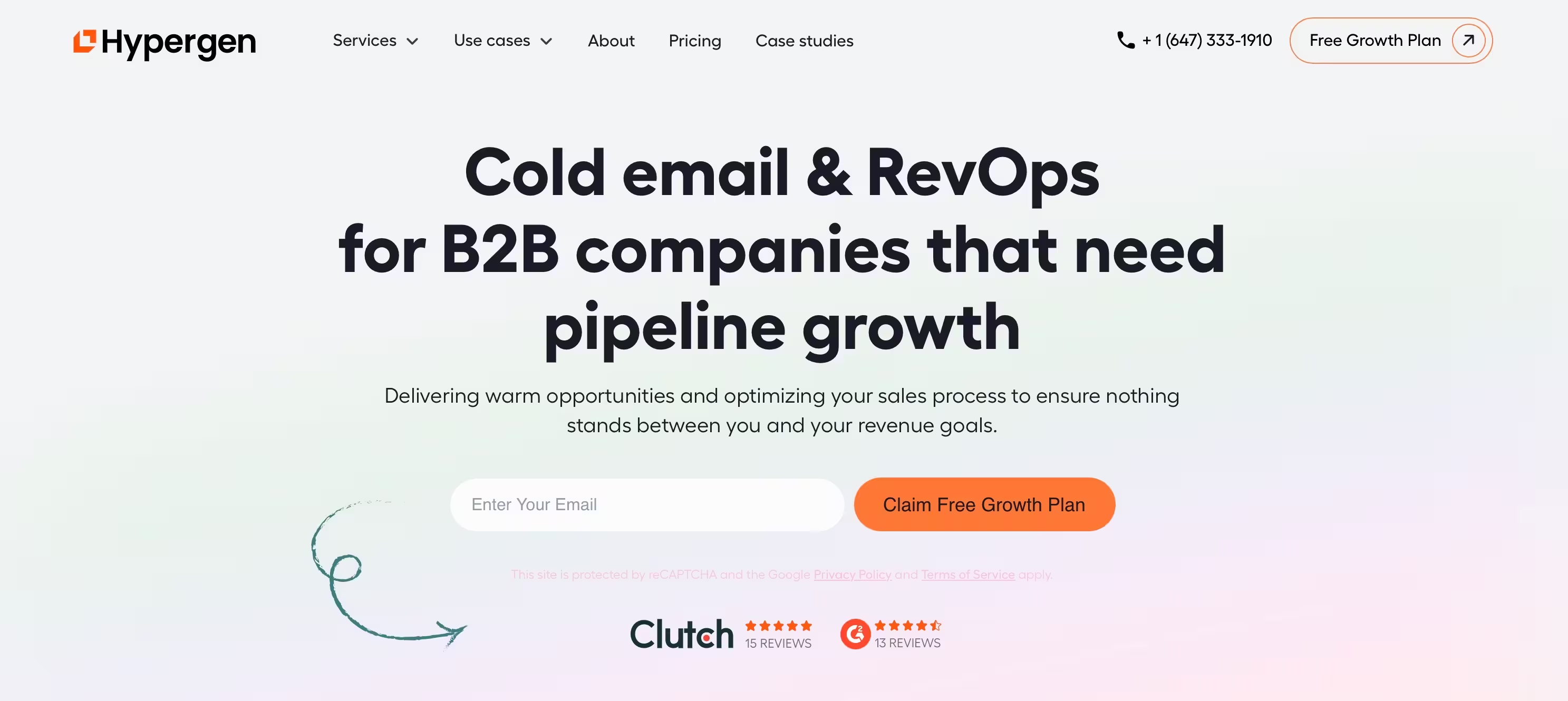
We built Hypergen around one conviction: reaching ten prospects who are genuinely mid-evaluation is worth more than blasting a hundred who happen to match a job title.
Using Clay, we monitor 100+ company signals, from funding rounds and leadership changes to tech stack migrations and competitor reviews, to identify the accounts that are actually in-market before we send a single email.
Which means that every campaign starts with a prospect list built around purchase intent, not just job titles.
Every client gets a dedicated GTM specialist, customer success manager, and copywriter working as a unit. Infrastructure is always fully owned: dedicated secondary domains, inbox warmup, SPF/DKIM/DMARC, and continuous health monitoring.
CRM integration into HubSpot or Salesforce is standard, not an add-on, so your sales team sees pipeline activity without manually updating anything.
Main services offered:
- Signal-based B2B lead generation
- Dedicated cold email infrastructure
- Clay-powered data enrichment
- RevOps
- CRM consulting
- Sales funnel optimization
Pricing:
From $5,000/month (Lite: 7,500 prospects/month).
6-month minimum agreement.
What our clients say ⭐
Reviewers consistently call out speed and responsiveness, with "very nimble, quick, very on top of it" appearing across multiple reviews. G2 clients highlight CRM integration and A/B testing, with one noting Hypergen "takes care of all the demanding tasks, from A/B testing to content creation, while integrating seamlessly with our CRM."
And in terms of results:
- Blings.io closed 3 enterprise deals (including Fortune 500 brands) in 6 months at 8X ROI
- Bramlett Residential generated $400M in revenue and scaled from 18 agents to over 72.
- Set 2 Close hit 300% growth with Hypergen now accounting for over half of their revenue.
- Dingus & Zazzy generated $4.5M in pipeline over 18 months at 15X ROI.
Best for: B2B companies across industries (M&A advisory, SaaS, financial services, digital marketing agencies, consulting, healthcare, insurance companies, real estate and more) that want signal-based outreach, full infrastructure ownership, and a team that measures success by closed deals, not emails sent.
LeadHaste
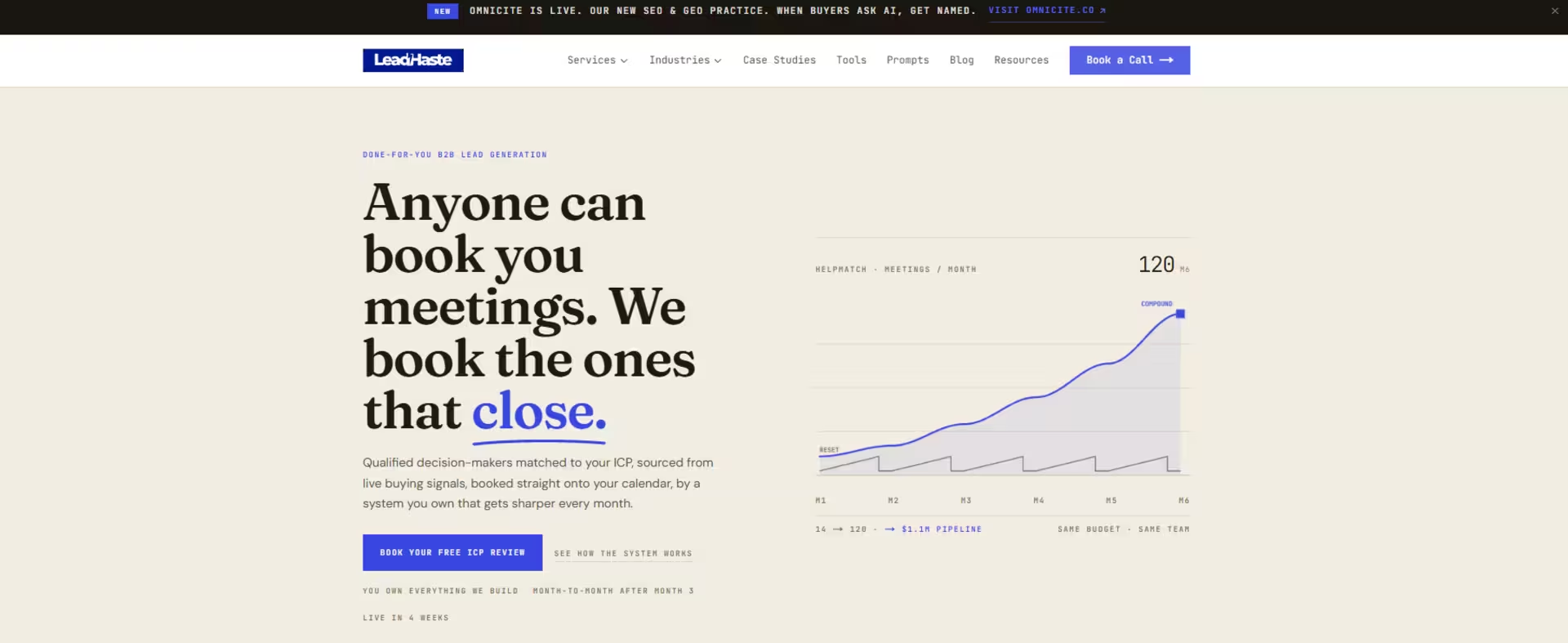
LeadHaste's pitch is ownership, and it is worth taking literally before comparing them on anything else. Every domain, mailbox, contact list and campaign asset is registered in the client's name from day one, so if the engagement ends the client keeps the infrastructure, the data and the warmed sender reputation rather than starting over with another provider.
Founded in 2023 and now running outbound for 30+ B2B companies, they cover ICP and TAM research, signal-based prospecting, contact verification, dedicated sending infrastructure, copy, campaign management, reply handling and CRM integration. Targeting combines firmographics with twelve families of live buying signal, including funding rounds, leadership changes, hiring activity and tool changes, so campaigns reach companies with a current reason to evaluate rather than a matching job title.
Worth noting: systems go live in about four weeks, the initial engagement is three months before moving to month-to-month, and with a 2023 founding date the track record is shorter than most agencies here.
Main services offered:
- B2B lead generation and appointment setting
- ICP and TAM research
- Signal-based prospecting and contact verification
- Dedicated cold email infrastructure
- Campaign copywriting and management
- Reply handling and CRM integration
What their clients say ⭐
In LeadHaste's published client stories, HelpMatch's CEO describes going from zero outbound to 120 meetings a month by month six, and Aviloo's CMO highlights market-specific, multilingual outreach across more than 30 markets. They hold Clay Artisan Solutions Partner and Smartlead certifications, both independently verifiable. Unlike most agencies on this list, though, the published numbers are self-reported in-platform rather than drawn from third-party review profiles, so ask for results from a comparable industry and ICP before signing.
Pricing:
From $2,500 per month, with a three-month initial engagement followed by month-to-month service. Sending infrastructure is billed separately at cost and remains owned by the client.
Best for: B2B companies with proven offers and deal values above $2,000 that want a fully managed outbound operation without giving up ownership of their infrastructure and data.
OutreachBloom
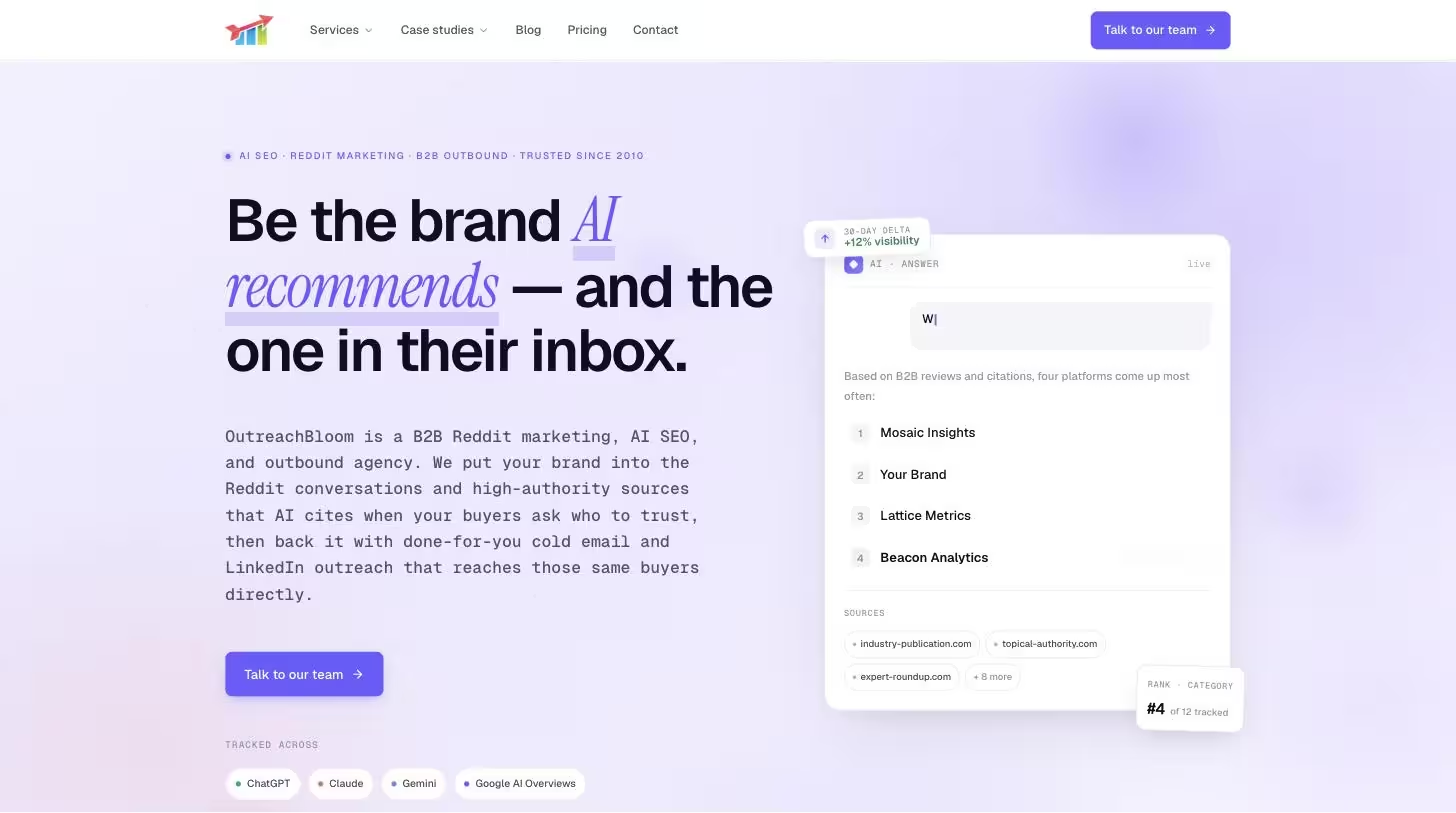
OutreachBloom runs cold email end to end for B2B SaaS and service companies, then adds a second motion most cold email agencies do not offer: getting the client named in the AI answers and Reddit threads buyers check before they reply. Based in Olympia, Washington, it works mainly with teams of 10 to 200 people.
The cold email program starts with an ICP kickoff and real-time list building from premium B2B databases. Fresh sending domains go live with SPF, DKIM and DMARC from day one, and nothing sends before a two-week warm-up. Replies reach the client however it prefers, forwarded straight to closers or qualified first.
Worth noting: OutreachBloom publishes its starting prices, which few agencies here do, but its AI visibility and Reddit programs are priced separately, so a combined engagement costs more than the cold email figure alone.
Main services offered:
- Done-for-you cold email, covering infrastructure, lists, copy, sending and replies
- LinkedIn outreach
- AI SEO and AI visibility tracking
- Reddit marketing
- Reply handling, forwarded straight through or qualified first
Pricing:
Cold email from $2,400 per month, LinkedIn outreach from $1,000, Reddit marketing from $1,900 and AI visibility from $3,400, per OutreachBloom's pricing page.
What their clients say ⭐
In OutreachBloom's published case studies, RevenueBase reached 100% ROI within 30 days of its first campaign, and Labyrinth Learning reported 157% ROI in its first 30 days, including a deal worth over $3,000 in month one. Both results are self-published, so ask for references from a comparable industry before signing.
Best for: B2B SaaS and service companies of 10 to 200 people that want outbound handled end to end and want to show up when buyers ask AI tools who to trust.
Martal Group
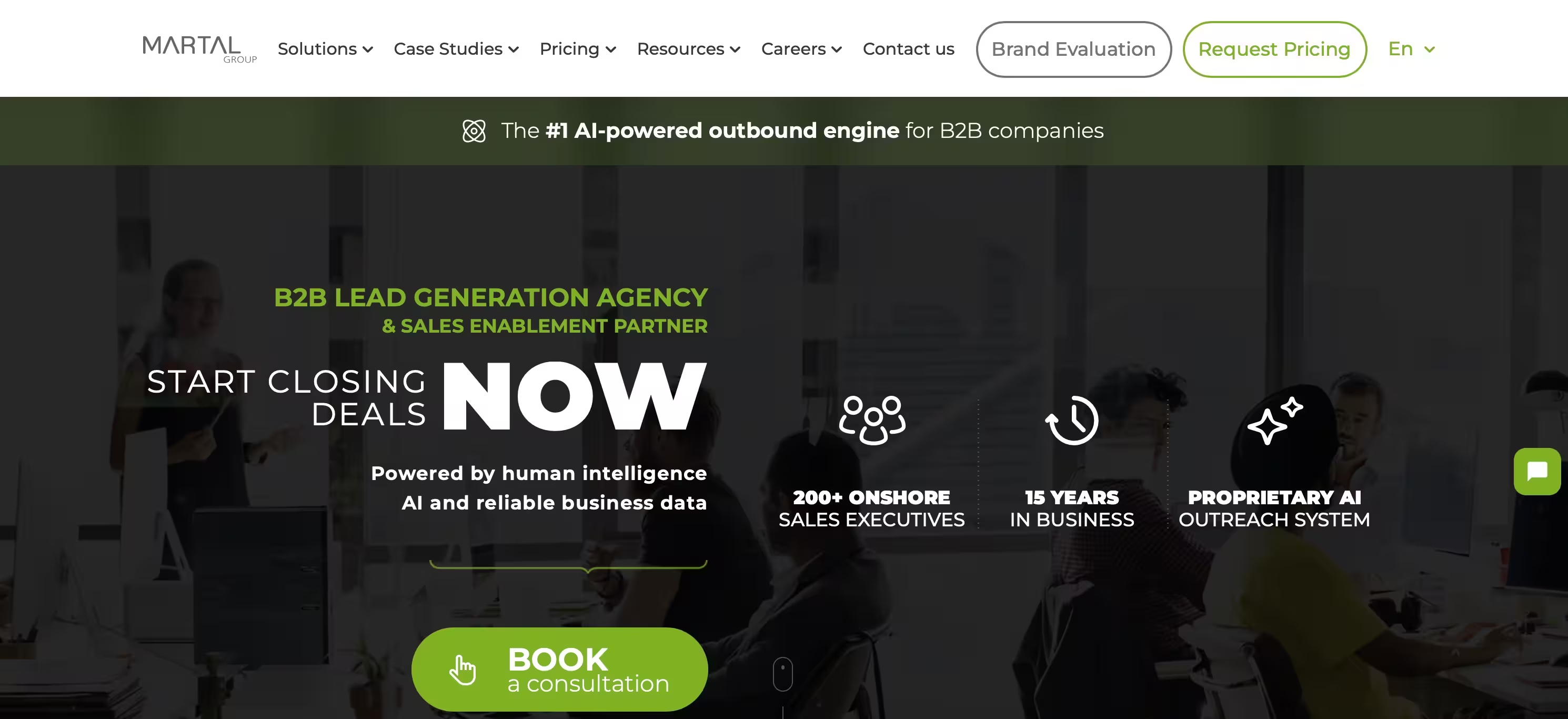
Source: MartialGroup
Martal has been in this space for 15+ years, and that longevity gives them real playbook depth across 50+ industries and 2,000+ clients.
Rather than leaning on email automation, they deploy onshore sales executives across North America, Europe, and LATAM, coordinating email, LinkedIn, and phone as a single outbound motion.
In April 2026, they launched a consolidated agentic AI platform that delivered a verified 39% lift in booked meetings across their client base. It combines natural language ICP search, lookalike modelling, and contact verification at 90%+ accuracy, with AI handling the repetitive tasks (list building, scoring, sequencing) while human executives manage relationships and qualification.
Worth noting: they require a 3-month pilot before moving to month-to-month, and reporting transparency in the early stages can be limited according to multiple reviews.
Main services offered:
- Outbound lead generation
- Appointment setting
- Email and LinkedIn outreach
- Cold calling
- Fractional and full-time SDR outsourcing
- AI SDR platform
Pricing:
Retainers typically start around $5,000/month.
3-month pilot required. Custom quotes based on scope and geography.
What their clients say ⭐
Positive themes centre on domain knowledge and responsiveness to performance data: one Clutch reviewer praised their "ability to quickly grasp our value proposition and market," and another noted they "brought practical ideas around messaging, subject lines, and sequencing that actually improved engagement."
The recurring criticism is early-stage reporting visibility, with reviewers advising to front-load knowledge transfer and treat the team as an active partner from day one, not a set-and-forget service.
Best for: B2B tech, SaaS, cybersecurity, and IT companies that need on-shore North American reps with genuine industry knowledge across a coordinated multi-channel outbound motion.
ColdIQ
Source: ColdIQ
ColdIQ's positioning is worth understanding clearly before you engage them: they build outbound systems, not campaigns.
As a Clay Elite Studio Partner, one of only four agencies worldwide to hold that designation, they specialise in GTM automation engines that use intent signals, technographic data, and behavioural triggers to find and engage prospects at scale.
Their 90-day Flywheel Performance Review evaluates pipeline created and cost per opportunity before scaling, though 2026 client reviews confirm the full engagement runs to a 3–6 month minimum commitment before results meaningfully compound.
That is a significant financial commitment, so expect $15K–$30K+ before you can fairly evaluate whether it is working.
The key differentiator is that clients leave with an outbound system they can run independently. That is genuinely useful if you plan to bring this in-house eventually, but it also means ColdIQ is a slower burn than agencies that start booking meetings in the first few weeks.
Main services offered:
- AI-powered GTM automation (Clay-based)
- Cold email campaigns
- LinkedIn outreach
- Email infrastructure setup
- Lead list building and enrichment
- Buying-trigger-based sequencing
Pricing:
Custom quotes.
Works primarily with B2B SaaS at $100K+ ARR.
Starts at ~$5,000/month with a 3–6 month minimum commitment.
What their clients say ⭐
Some clients describe a collaborative team that is "detail-oriented and very focused on over-communication," with reply rates above industry average.
However, a G2 review flags no meaningful pipeline results after several months and specifically recommends pushing for concrete KPIs and deliverables upfront before signing.
So results vary considerably by industry fit and how tightly the ICP is defined at the start.
Best for: B2B SaaS companies at $100K+ ARR that want a systems-first approach, can absorb a 3–6 month ramp, and are planning to eventually bring outbound in-house.
Growth.cx
Source: Growth.cx
Growth.cx works exclusively in B2B SaaS and tech, and depending on your market, that is either a meaningful advantage or an immediate disqualifier.
Their core argument is that a cold email often leads to a website visit before it leads to a reply, so your content and digital footprint need to actively support the outreach message.
In practice, that means layering content marketing alongside cold email and LinkedIn, running A/B testing across buyer personas before scaling, and targeting 10–15 high-quality meetings per month per client rather than chasing volume.
It is a more thoughtful take on the channel than most agencies offer, though it also means onboarding takes longer and requires meaningful involvement from your side.
Pricing is only available through consultation, which makes upfront benchmarking impossible.
Main services offered:
- Cold email outreach
- LinkedIn outreach
- Content marketing aligned with outreach messaging
- ICP research, persona A/B testing, and campaign management
Pricing:
Custom quotes via consultation. No publicly listed pricing.
What their clients say ⭐
The verified feedback is positive on SaaS-specific messaging, with reviewers praising copy that speaks to MRR, churn, and LTV rather than generic B2B language. Reviews also report open rates of 40–80% and click-through rates of 15–35% across campaigns.
On the constructive side, multiple reviews flag that onboarding requires real time investment before results compound, and some clients note minor communication delays mid-campaign.
Best for: Early-stage to scale-up B2B SaaS and tech companies willing to invest in the content layer alongside outreach. Outside SaaS and tech, look elsewhere.
Pearl Lemon Leads
Source: Pearl Lemon Leads
Pearl Lemon Leads sits inside the broader Pearl Lemon Group, which also covers SEO, PR, and digital marketing. That gives them channel breadth you rarely find at this price point.
Cold email runs alongside cold calling, LinkedIn, and appointment setting, managed by a remote team across Europe, Africa, Asia, and North America. So the geographic spread is useful for campaigns targeting UK and US markets simultaneously, where GDPR and CAN-SPAM compliance both need active management across time zones.
They come in below most full-service agencies on this list, which reflects the leaner model rather than a quality premium.
Main services offered:
- Cold email outreach
- Cold calling
- LinkedIn prospecting
- Appointment setting
- SEO and content marketing (via Pearl Lemon Group)
Pricing:
Minimum project size approximately $1,000; hourly rate $50–$99/hr.
Lead generation projects typically range from $5,000 upwards.
Custom quotes for ongoing campaigns.
What their clients say ⭐
Positive reviews highlight responsiveness and a willingness to adjust messaging over time, with several clients noting weekly calls and daily lead reports during active campaigns.
That said, a notable subset of reviewers report very few or no leads over multi-month engagements, and one reviewer spent significant time in onboarding only to be told the team lacked capacity.
Best for:
SMB and mid-market B2B companies targeting UK and US markets who need multi-channel outreach at a lower entry cost than a full-service agency.
How to choose the right cold email agency: final checklist
Signing with the wrong cold email agency doesn't feel like a disaster at first. It feels like slow results, vague reporting, and a strategist who always has a reasonable explanation.
The damage is quiet until it isn't… and by then, the domain is burned and the budget is gone.
And the framework in this guide won't save you from every bad agency. But it will surface the red flags before you sign rather than three months after. That's the whole point.
So if one thing sticks: ask for specifics. On infrastructure, on targeting, on copy, on reporting. The agencies worth hiring will have them.
If you need help running cold email that actually lands in inboxes, reaches the right people, and books meetings worth taking, that's what we built Hypergen for.
We’re more than happy to walk you through what it looks like for your specific ICP. ✅
Frequently asked questions
Cold email agencies typically charge between $2,000 and $15,000 per month. Full-service agencies managing dedicated domains, list building, copywriting, and ongoing optimisation generally start at $4,000–$8,000/month.
Ask about: dedicated secondary domains (never your main domain), warmup period length (minimum three weeks), inbox health monitoring during campaigns, how they build prospect lists (signals vs demographics), CRM integration capability, and what benchmarks define success in your specific industry.
A healthy cold email reply rate is 5–10% for broad outreach campaigns. Signal-based outreach targeting actively in-market prospects can achieve 15–30%. Anything below 3% typically indicates a deliverability problem, a targeting issue, or copy that isn't resonating.
Generally no. Performance-based models incentivise agencies to book volume over quality, often pulling prospects outside your ICP. A monthly retainer with defined benchmarks creates better alignment: the agency's renewal depends on delivering real results, not just hitting a meeting count.
Track: reply rate (aim for 5–15%), positive reply rate, meetings booked per month, meeting-to-opportunity conversion rate, domain health and deliverability scores, and cost per qualified meeting. Vanity metrics like open rates matter less than pipeline contribution and closed revenue.
Don’t miss these


Get your first lead this month
14 days to get started. 7 days to get your first lead on average.


