


The email marketing tools for SaaS that actually build pipeline
TL;DR: SaaS email marketing tools explained
- Lifecycle email and cold outbound are not the same tool doing the same job. One retains users you already have. The other finds customers who have never heard of you. 🎯
- Lifecycle email contributes roughly 1.3% of total MQLs in B2B SaaS. It converts and retains existing leads and cannot generate net-new pipeline on its own.
- The strongest lifecycle tools for SaaS are Customer.io, Loops, HubSpot, Sequenzy, and ActiveCampaign.
- The leading cold outbound tools are Instantly, Saleshandy, Plusvibe, and Clay. Clay is not a sender. It is the intelligence layer that makes personalization signal-based rather than demographic. 📬
- Signal-based targeting typically delivers a 3–5x lift in reply rates over generic list-based outreach.
- Most SaaS teams spend $500–1,500/month running both email layers. Lifecycle tooling runs $100–500/month and cold outbound infrastructure adds another $200–600/month on top.
- Booked meetings mean nothing without a CRM to catch them. The handoff gap is where most outbound pipelines quietly leak: replies with no next step attached just disappear.
We've talked to a lot of SaaS founders who are frustrated. Really frustrated.
They've got their lifecycle emails dialed in. Onboarding flows, trial nudges, re-engagement sequences. Their open rates look healthy. Churn has ticked down. Things feel... good?
Then someone in the board meeting asks: "How many net-new customers did email bring in this quarter?"
Silence. 😬
Here's the thing: SaaS email marketing covers two completely different jobs, and most teams are funding one while completely ignoring the other.
Lifecycle platforms are retention and conversion engines. Cold email outbound is an acquisition engine. So yes, both use email. But that's essentially where the similarity ends.
So in this post, we're going to draw that line clearly. We'll walk you through what each category of tool actually does, which ones fast-growing SaaS companies use in the real world, and exactly when to add cold outbound to the mix.
So by the end, you'll definitely know what your email stack is missing, and why.
Let's get into it.
What is the difference between email marketing tools and cold email tools for SaaS?
Email marketing tools (like Customer.io, Loops, or ActiveCampaign) send behavior-triggered messages to people who already know your product.
Cold email tools (like Instantly or Smartlead) send personalized outreach to prospects who have never heard from you.
So yes, both use email, but they serve completely different purposes, require separate infrastructure, and should never share the same domain reputation (or sender reputation).
The distinction runs a lot deeper than just the audience, though.
- Lifecycle email tools work with opted-in users: people who signed up for your trial, filled in a form, or downloaded something. Every email lands in the inbox of someone who already knows your brand. So the goal is: to move them forward, to activate the new user, to convert the free trial, to reduce churn, to drive an upsell, etc.
- Cold email tools, on the other hand, work with contacts who've never interacted with your brand. You're building a list from scratch using ICP criteria: company size, industry, job title, tech stack, buying signals. And the goal here isn't to nurture, but to start a conversation that leads to a demo.
And the scorecards are completely different too.
Lifecycle email gets measured on conversion rates, churn reduction, and expansion revenue.
Cold outbound gets measured on one thing: pipeline. Replies, meetings booked, deals created. Nothing else really matters when it comes to cold outbound.
With that said, here's where things get interesting...
Can email marketing tools alone generate new customers for a SaaS company?
Not reliably. Lifecycle email tools are retention and conversion engines, not acquisition engines. They work on people who have already signed up, visited your pricing page, or downloaded a resource.
But to consistently bring in net-new customers who have never interacted with your brand, you need an active outbound lead gen, and that requires a different category of tool entirely.
This one trips up a lot of really smart SaaS marketing teams.
According to HockeyStack data cited by Promodo, email marketing contributes roughly 1.3% of total MQLs in B2B SaaS.
And that's not a knock on email at all. It's a clarification of what lifecycle email is actually doing: it's converting and retaining the leads you already have. It is not finding new ones.
For new customer acquisition, you need to reach people who don't know you exist yet. And lifecycle tools simply have no mechanism for that. They just sit and wait for someone to enter your funnel.
So cold outbound is what fills that gap.
We ran outbound for Blings.io, a SaaS company entering the US market with zero brand recognition there. So we built a targeted list of enterprise prospects, set up dedicated sending infrastructure, and launched a signal-based cold campaign.
And the result is 3 enterprise deals closed in 6 months, 8x ROI. Every single one of those contacts had never heard of Blings before our first email landed in their inbox.
So no, that kind of outcome isn't possible with a lifecycle tool. Full stop.

So if your pipeline is thin and you're relying purely on lifecycle email to fix it, it won't. That's the wrong tool for the job.
And if you're not sure where to start, our breakdown of 9 lead generation strategies that actually convert is worth a read: it covers the fastest channels for getting pipeline moving, including why intent-based outbound beats generic outreach every time.


The two layers of a complete SaaS email stack
Okay, so now that we've established what each layer does, let's look at the full picture side by side.
(Most SaaS email marketing roundups only ever cover layer one. And that's exactly why so many teams end up with beautiful automations and an empty pipeline.)
The lifecycle layer handles everything after someone enters your world: activation sequences, onboarding flows, feature adoption nudges, renewal reminders, expansion campaigns.
Tools like Customer.io or Loops are purpose-built for this.
The cold outbound layer handles everything before someone enters your world: ICP list building, signal-based targeting, personalized first-touch sequences, follow-ups, meeting booking.
It's proactive, not reactive. And it requires dedicated sending domains, warmup infrastructure, and a completely separate tool stack.
One more thing worth calling out here: good email segmentation matters in both layers, but the logic is completely different.
Lifecycle segmentation lives in product behavior: who activated, who's churning, who's on which plan.
Cold outbound segmentation lives in ICP criteria: who fits your ideal customer profile and what signals suggest they're in-market right now.
Now with that foundation in place, let's talk tools.
What email tools do fast-growing SaaS companies actually use?
Fast-growing SaaS companies typically run two separate email setups in parallel.
For lifecycle email, the most common choices are Customer.io, Loops, HubSpot, Sequenzy and ActiveCampaign.
And for outbound, the most common ones are Instantly, Salesforge, Plusvibe, Saleshandy and Clay.
So here's a breakdown of what each one actually does and who it's best for:
Lifecycle email tools 📬
Customer.io

Source: Customer.io
If your SaaS product fires more than a handful of events and you need your email automation to actually respond to them, Customer.io is the tool most teams graduate to.
Every workflow can branch based on real in-app signals: feature activation, inactivity thresholds, subscription changes, plan downgrades.
The API is genuinely one of the best in the category (engineering teams love it just as much as marketers do), and the 2026 updates added Data Pipelines support for syncing computed traits directly from Snowflake or BigQuery.
It's not the cheapest option, but if you need serious behavioral depth, nothing in this price range comes close.
Best features:
- Event-based triggers tied directly to in-app behavior
- Multi-channel messaging: email, push, SMS, and in-app from one platform
- Powerful segmentation based on live user attributes and event history
- Visual workflow builder with branching logic for complex journeys
- Data Pipelines integration with Snowflake and BigQuery for warehouse-driven personalization
Best for: Growth-stage SaaS companies with dedicated marketing teams who need behavior-driven lifecycle automation and have the technical resources to get the most out of a powerful API.
Loops

Source: Loops
Where Customer.io goes deep, Loops goes lean (in the best possible way). It strips lifecycle email back to what early-stage SaaS teams actually need, and does it with an interface that's genuinely a pleasure to use.
Transactional and marketing email live in one system, so your onboarding sequences and password resets are in the same place without juggling two tools.
Setup takes hours, not weeks (a rare thing in this category), and exactly what you want when you're trying to ship product and send good emails at the same time.
Best features:
- Unified transactional and marketing email in one platform
- Clean, fast Notion-style interface with minimal configuration required
- Native integrations with Stripe, Segment, Zapier, Intercom, and Supabase
- Event-based automation without needing to write custom code
- Unlimited sends on paid plans (no email volume caps)
Best for: Early-stage SaaS founders and small teams who want solid lifecycle automation up and running fast, without becoming full-time email ops specialists.
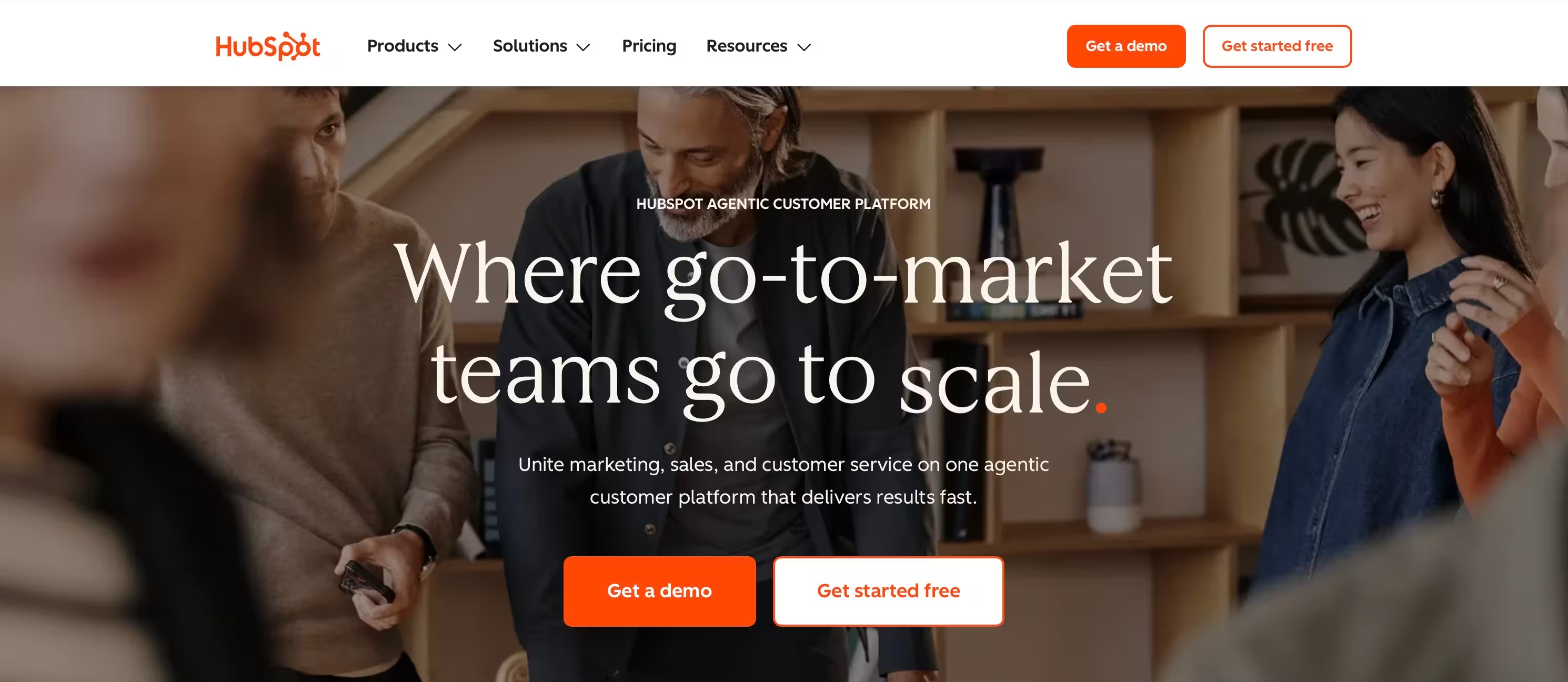
HubSpot
Source: Hubspot
HubSpot earns its place here not because it's the most powerful email tool, but because it's the most connected one.
When you have a sales team running assisted deals alongside a product-led motion, having lifecycle emails, CRM activity, deal stages, and contact history in one unified view genuinely changes how the whole team operates.
That said, it does get expensive quickly, and the interface can feel like a lot when all you really want is a few sequences. So know what you're buying it for.
Best features:
- Deep native CRM integration with shared contact timelines across sales and marketing
- Drag-and-drop email builder with strong personalization tokens
- Detailed reporting that ties email engagement directly to pipeline and revenue
- Breeze AI for content creation, send-time optimization, and campaign suggestions
- Extensive integration ecosystem with 1,000+ tools
Best for: SaaS companies running a sales-assisted or hybrid GTM motion where marketing and sales need a single source of truth for every customer interaction.
Sequenzy

Source: Sequenzy
Here's something most lifecycle email tools don't want you to think about: you're being charged for contacts you may never email. So
Sequenzy is an email marketing platform that flips the model entirely: unlimited contacts, pay per email sent.
Your bill only grows when your product grows and you're actually sending. Built on AWS SES infrastructure, it handles both marketing and transactional email in one system (so onboarding flows and password resets live side by side without two separate subscriptions).
The MCP (Model Context Protocol) integration is a genuinely forward-thinking touch, letting you manage campaigns, contacts, and analytics directly through AI assistants like Claude.
Best features:
- Pay-per-email pricing with unlimited contacts (no penalties for growing your list)
- Combined marketing and transactional email on one platform and one subscription
- AI-assisted campaign creation and optimization built in
- Event-based automation via REST API for product-triggered sequences
- MCP server support for managing email workflows through AI assistants like Claude
- AWS SES-powered delivery infrastructure for reliable inbox placement
Best for: Bootstrapped SaaS founders, indie developers, and small product teams that want a lean, SaaS-native email platform without enterprise complexity or contact-based pricing traps.
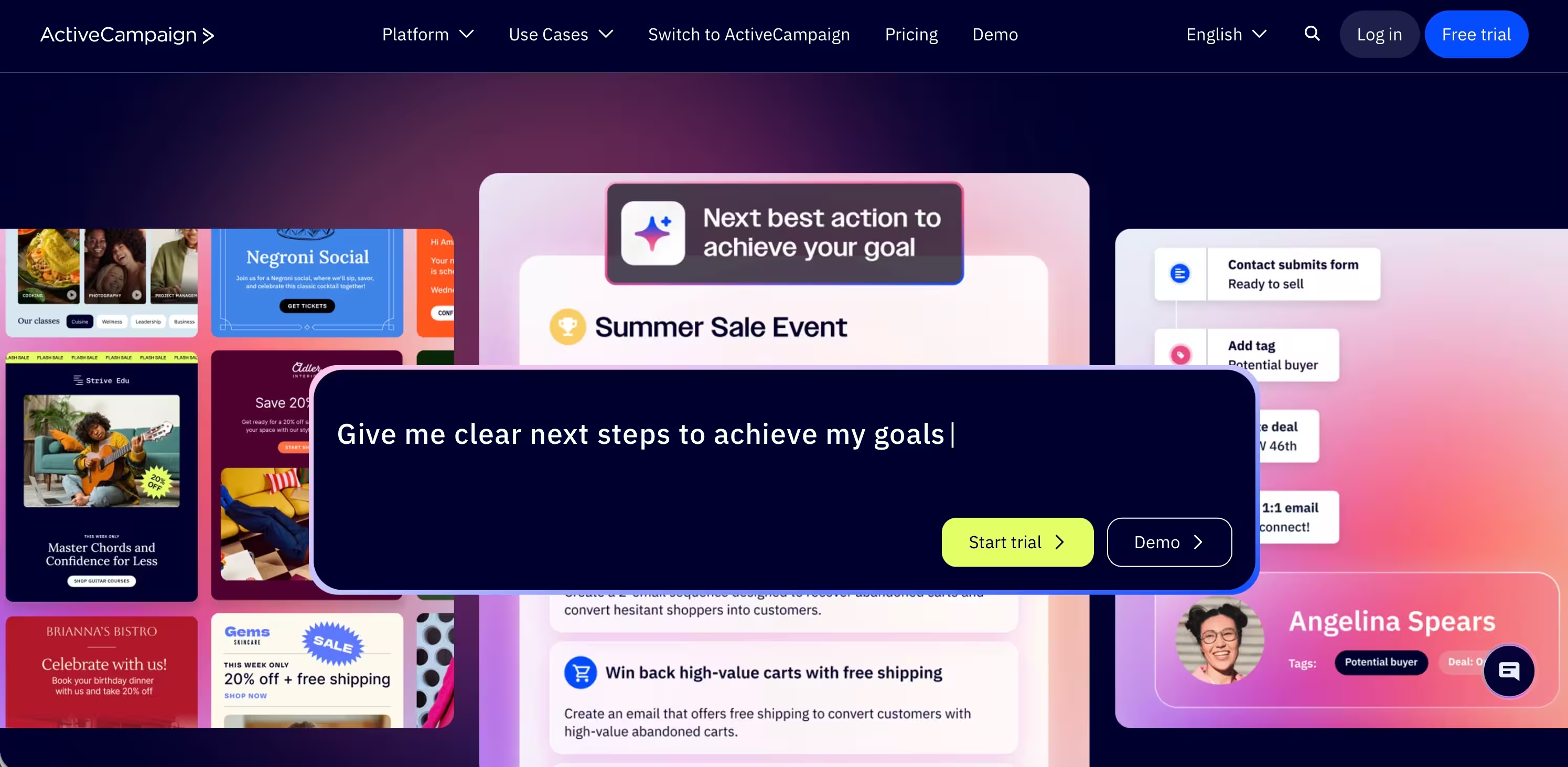
ActiveCampaign
Source: ActiveCampaign
ActiveCampaign sits in an interesting spot: more automation depth than most entry-level tools, but without the complexity (or price tag) of Customer.io or enterprise HubSpot.
It handles email sequences, lead scoring, site tracking, and CRM functionality in one package, with an automation builder that, honestly, rivals tools twice the price.
The 2025/2026 updates added AI-powered predictive sending and a Postmark integration for transactional email, closing a gap that previously pushed teams toward separate tools. So for teams that want behavioral automation without a six-month implementation project, it's a genuinely strong middle ground.
Best features:
- Visual automation builder with branching logic, conditional steps, and unlimited automation actions (on Plus and above)
- Built-in CRM with deal tracking and pipeline views
- Lead scoring that adjusts based on email engagement and site behavior
- AI-powered predictive sending that optimizes delivery timing per individual contact
- Postmark integration for transactional email alongside marketing sequences
Best for: SaaS teams at the early-to-mid growth stage that need serious automation capabilities but aren't ready to invest in a dedicated lifecycle platform like Customer.io.
Cold outbound tools 🚀
Plusvibe

Source: Plusvibe
Plusvibe was built from the ground up as a cold email and deliverability platform, which means deliverability isn't an add-on; it's the core product.
The private warmup network runs over 250,000 accounts that simulate human-like email behavior, keeping your sender reputation clean before and during campaigns.
The enrichment engine pulls from 80+ data sources to generate genuinely specific first-line icebreakers (not just first name + company name personalisation), and the AI Sequence Writer builds full campaign copy from a single prompt.
So our honest opinion, is that it's one of the more complete all-in-one setups available without the enterprise price tag, with a reported 99.8% average inbox placement rate.
Best features:
- Private warmup network of 250,000+ accounts for isolated, human-like domain warming
- 80+ data sources powering hyper-personalized first-line icebreakers at scale
- Unlimited email accounts and AI-powered warmup on all plans
- AI Sequence Writer that generates full campaign copy with one click
- 99.8% average inbox placement rate with daily deliverability reporting
Best for: Growth teams and agencies that want to consolidate their cold email stack into one platform, with strong deliverability infrastructure and AI personalization that doesn't require a separate enrichment tool like Clay.
Clay

Source: Clay
Clay deserves its own mention because it isn't a sending tool at all.
It's the intelligence layer that makes cold outbound actually work at a signal-based level.
Clay pulls buying signals: funding events, job postings, tech stack changes, headcount growth, and enriches your prospect list with context that makes personalization feel genuinely specific rather than just a mail merge with a first name.
We use Clay on nearly every campaign we run for SaaS clients, and the difference between generic cold email and signal-based cold email is typically a 3-5x lift in reply rates.
👉 You can learn a lot more on that in our guide on how to use Clay for data enrichment.
Best features:
- Real-time signal tracking: funding, hiring, tech stack changes, competitor reviews
- Waterfall enrichment that pulls from multiple data sources to maximize match rates
- Direct integration with all major cold email sending tools
- Custom Clay tables built around specific ICP criteria and industry signals
Best for: SaaS teams and agencies that want to move beyond demographic targeting and run signal-based outbound where timing and context drive replies, not just volume.
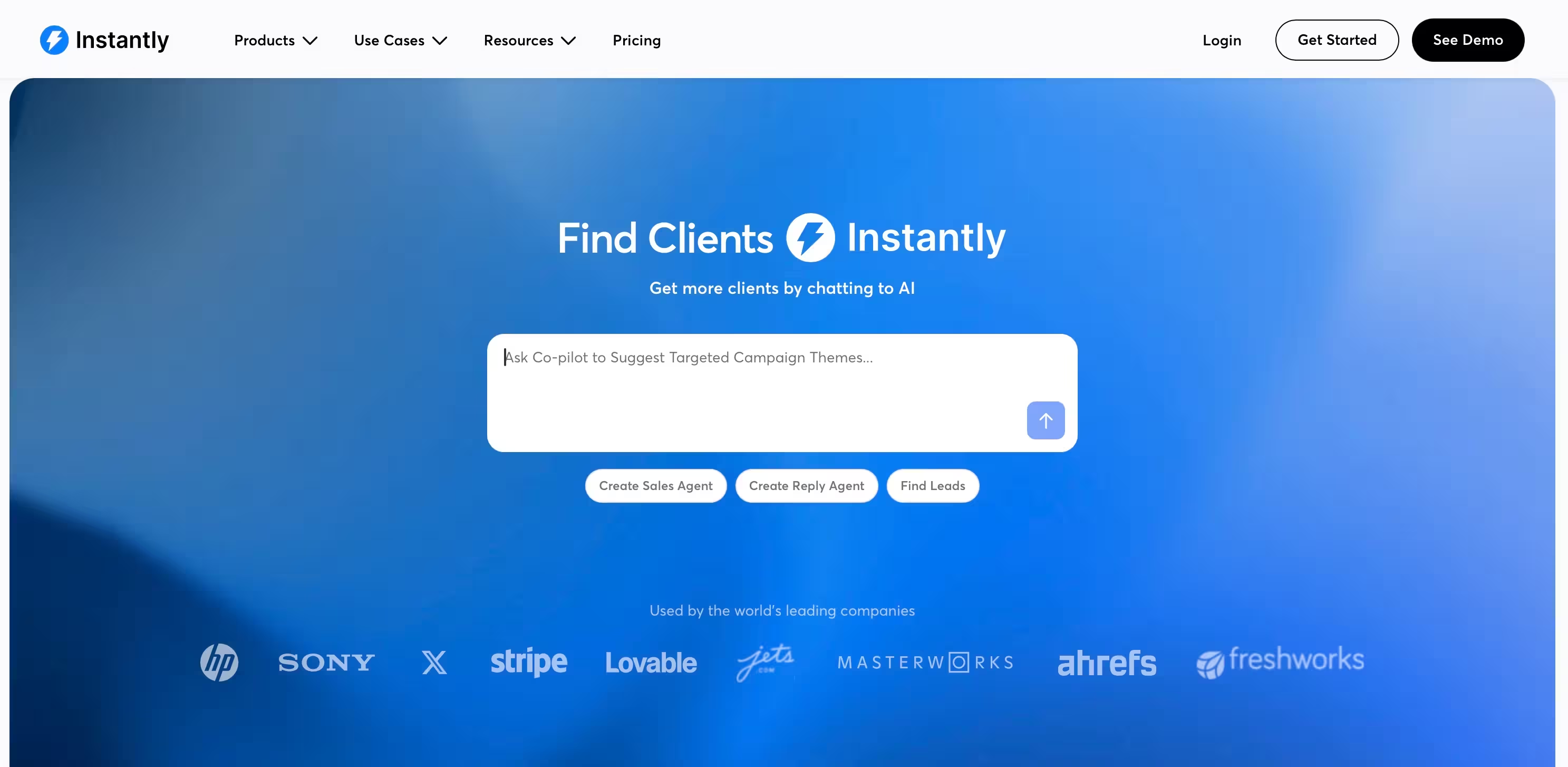
Instantly
Source: Instantly
Instantly is one of the most widely adopted cold email platforms for a simple reason: it gets campaigns live fast without cutting corners on deliverability.
Unlimited email accounts, automated email domain warmup, and a clean unified inbox for managing replies all come standard on every plan. The AI Smart Send feature staggers sends automatically to protect sender reputation without you having to think about it.
One thing to be aware of: the SuperSearch B2B lead database is a separate add-on subscription, not included in the base plan, so budget for that if you're relying on Instantly for prospecting too.
Best features:
- Unlimited email accounts and warmup across all plans, including the base tier
- Inbox rotation that automatically spreads sending volume for safer deliverability
- AI Smart Send that staggers emails to mimic natural human sending patterns
- Unibox: centralized inbox for managing replies across all sending accounts
- SuperSearch B2B lead database with 450M+ contacts (separate add-on subscription)
Best for: SMBs and growth-stage teams that need to scale cold outbound quickly and want a reliable, well-rounded platform without a steep learning curve.
Saleshandy

Source: Saleshandy
If your team is building its first cold outbound motion and doesn't want to stitch together three different subscriptions to do it, Saleshandy is worth a serious look.
The platform packs a 700M+ B2B contact database, email verification, sequence automation, and a unified inbox into one plan, with no separate Apollo or prospecting tool needed. And unlike most per-seat tools that get expensive fast as you hire, Saleshandy uses team-based pricing, so your costs don't balloon as you add reps or sending accounts.
The A/Z testing (up to 26 variants) is also a nice touch for teams that actually want to optimise copy, not just guess.
Best features:
- 700M+ B2B contact database built directly into the platform (no Apollo subscription needed)
- Unlimited email accounts with sender rotation across all plans
- Built-in email verifier that reduces bounces before campaigns go live
- AI-powered sequence variants and A/Z testing up to 26 variants
- Unified inbox that consolidates replies from all accounts in one view
Best for: Startups and SMBs building their first cold outbound program who want an affordable all-in-one tool that covers prospecting, sending, and reply management without stacking multiple subscriptions.
And if the tool list above left you with more questions than answers, we've got two guides that go much deeper: a full comparison of the 12 best cold email tools across pricing, features, and real-world fit, and the 11 best email warmup tools broken down by use case so you're not just picking the most popular one.
So now that you know what's out there, let’s discuss how do you actually pick the right one.
How do you choose the right email marketing tool for your SaaS company?
Start by answering one question: are you trying to retain and convert users you already have, or generate meetings with prospects who don't know you exist?
If it's the first, evaluate lifecycle tools based on your product complexity, team size, and CRM integration needs.
If it's the second, you need cold email infrastructure, not a marketing platform.
Simple, right? (In theory, yes. But in practice, most SaaS teams need both.)
So here's a three-step framework that actually works:
Step 1: Identify the job you're hiring email to do
- Users signing up but not activating? Churning faster than you'd like? Not upgrading? You need a lifecycle tool.The problem is retention and conversion.
- Pipeline thin? Sales team running out of demos? Can't predict new customer acquisition? You need cold outbound infrastructure. The problem is acquisition.
- Both? Well, then you need both. (Most growth-stage SaaS teams do.)
Step 2: Match the tool to your stage
- 🌱 Pre-PMF: Start with Loops or Sequenzy. Hold off on cold outbound until you know exactly who you're targeting and why.
- 📈 Early growth ($1M-5M ARR): Upgrade to a behavioral lifecycle platform (Customer.io or HubSpot) and add cold outbound infrastructure alongside it.
- 🚀 Scaling ($5M+ ARR): You should be running both layers fully. At this point, decide whether you want an in-house SDR team running outbound or a B2B cold email agency doing it.
Step 3: Never run both on the same domain or infrastructure
This step here is very important.
Your lifecycle emails go to opted-in users who trust you. But your cold emails go to strangers who might mark you as spam.
And one bad cold email campaign can tank the deliverability of your entire marketing email operation if they share infrastructure.
When should a SaaS company start investing in cold email outbound?
A SaaS company should start cold email outbound when it has a clear ICP, a proven value proposition (ideally with 5-10 happy customers), and a sales process that can handle booked meetings.
Product-market fit doesn't have to be perfect, but you need enough signal to know who you're targeting, what problem you're solving, and why someone would take a 20-minute call to hear more.
Here are the four signals that tell you you're ready:
- You can describe your ICP in firmographic and technographic terms. Not "mid-sized tech companies," but something more like "Series B SaaS companies with 50-200 employees, using Salesforce, actively hiring SDRs." The more specific, the better your targeting. And the better your targeting, the higher your reply rates.
- You have at least 5 reference customers you can name. "We helped [Company X] go from 0 to 40 demos per month" is an email that converts. "We help SaaS companies grow" is an email that gets archived.
- You have a sales process that can close the meetings you'll book. Cold outbound that books 20 demos is worthless if those demos never close. So get your demo-to-close motion working on inbound first.
- You have a CRM in place to track replies and pipeline. Cold outbound creates conversations at volume. Without a clean CRM, those conversations get lost in someone's inbox and die. Setting up proper lead routing ensures booked meetings actually reach the right person fast.
One more thing worth knowing: if you haven't built a formal outbound motion yet, starting with founder-led sales is almost always the right first move. Prospects respond to a founder in their inbox in a way they simply don't with a junior SDR.
So validate the ICP, nail the messaging, and document the playbook. And then bring in the team.
What we've seen work (and what hasn't) running outbound for SaaS companies
Okay, real talk time. We've run cold email campaigns for dozens of SaaS companies across different stages, markets, and ACVs. Some patterns are nearly universal.
The ICP specificity problem
The most common failure we see is SaaS teams targeting too broadly.
"VP of Marketing at a B2B software company with 50-500 employees" isn't an ICP. It's a demographic filter.
The SaaS companies getting the best results target based on behaviors and signals, not just firmographics.
Prezzee is a good example of what signal-based targeting actually looks like in practice. Their SDRs were getting below 1-2% reply rates in the US market, the messaging that worked in other regions simply didn't land.
We rebuilt the targeting around hiring triggers and competitor events, matched the tone to how HR buyers actually communicate (casual, personality-driven, timely around holidays), and reply rates jumped to 15-20%. That's a 7-8x lift.
And over 12 months, that translated to 619 leads and 24 closed deals.
That level of precision comes from Clay-powered prospecting. Without it, you're fishing with a net. But with it, you're targeting specific accounts at exactly the right moment.
The infrastructure mistake
The second most common failure: launching cold outbound from the main product domain.
We've had SaaS clients come to us after burning their primary domain's sending reputation by going straight to volume without proper warmup or separate infrastructure. And recovering from that can take months.
So always set up dedicated sending domains from day one. And make sure your cold email personalization is on point and you genuinely reference something specific about each prospect.
Because generic templates at scale from a damaged domain is the fastest way to waste your entire outbound budget.
The handoff gap
You can book meetings, that great. But if there's no one to take them or no CRM to catch them, they just... disappear.
This is the handoff gap, and it's more common than you'd think. Because cold outbound creates conversations at volume, yes. Replies come in fast, demos get booked, and then… nothing. Deals stall because there's no structure on the other side to receive them.
A well-configured CRM is what separates a pipeline that compounds from one that leaks. Every reply needs to land somewhere with a next step attached, not sit in a shared inbox waiting for someone to notice it. So that's usually a sales funnel optimization problem, not an outbound problem.
What actually converts in SaaS cold email
The emails that consistently generate replies for our SaaS clients have one thing in common: they reference something specific about the recipient's situation:
- A recent hire a funding event
- A competitor mentioned in a press release
- A job listing that signals a pain point
And they don't pitch the product in the first email, but they open a conversation.
For the full outbound system beyond just the email itself, our outbound sales strategies guide and our breakdown of what 120+ campaigns taught us about high-quality leads are definitely worth reading alongside this one.
The email stack that actually fills your calendar
Here's the clearest way to think about all of this:
Your lifecycle email tool is a retention and conversion machine. It works on the audience you already have. It keeps users engaged, moves trials toward payment, reduces churn, and drives expansion revenue. It's essential.
But it cannot fill your pipeline on its own. It never could.
Cold email outbound is how you go and find the customers you haven't met yet. It's proactive and it generates meetings with prospects who are the right fit for your product but have never heard of you.
It requires separate infrastructure, separate targeting logic, and a completely separate playbook.
So if you've got the lifecycle side handled but want to add a cold outbound motion that actually produces pipeline, schedule a free GTM audit with our team. We'll look at your ICP, your current setup, and where the gaps are, and give you a clear picture of what it would take to build a predictable outbound engine around your existing stack. 🎯
Frequently asked questions
Most SaaS teams spend $100–500/month on lifecycle email tools and $200–600/month on cold outbound infrastructure. Running both layers typically lands between $500–1,500/month in tooling. So the right number depends on your stage, sending volume, and whether you're doing outbound in-house or with an agency.
Yes. B2B cold email is legal under CAN-SPAM (US) and GDPR (EU) when done correctly: clear sender identity, relevant targeting, a working opt-out, and no deceptive subject lines. Targeting business prospects by role and relevance keeps you compliant. But blasting purchased consumer lists is a different story entirely.
If you've never run outbound before, outsourcing gets you to pipeline faster. The infrastructure learning curve alone (domains, warmup, deliverability) takes months to figure out from scratch. You can try to build in-house once you have a proven playbook and enough volume to justify a dedicated hire.
There's no single best tool because there are two different jobs. For lifecycle email, Customer.io, Loops, and Sequenzy are the strongest SaaS-native options. For cold outbound, Instantly, Salesforge, and Plusvibe are the most widely used. And most growing SaaS companies need both.
Define your ICP first: industry, company size, tech stack, job title. Then use tools like Clay to enrich with buying signals (funding, hiring, tech changes). Always verify emails before sending to keep bounce rates under 2%.
Don’t miss these

Get your first lead this month
14 days to get started. 7 days to get your first lead on average.


